Pambazos: what they are, origin and how to make them

Edmond Bojalil · Founder, Recetas Mexas
Updated: 10 Sept 2026
What is it?
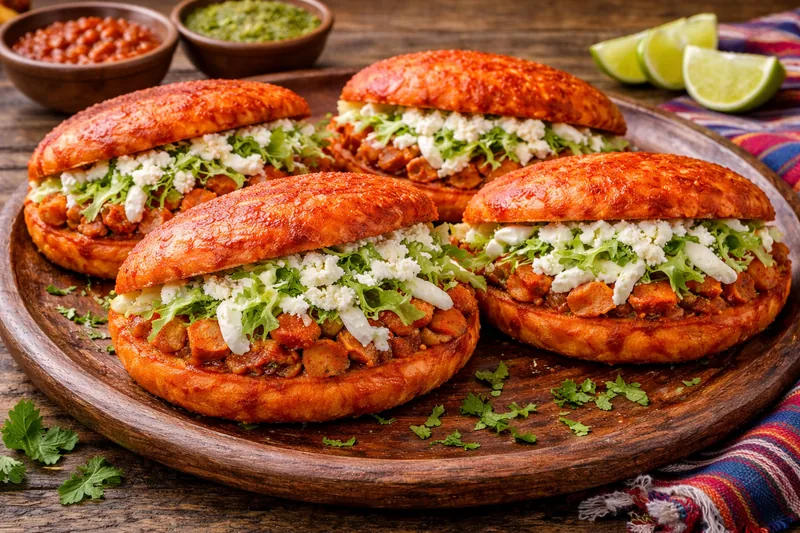
Pambazos are one of the most representative street antojitos of Mexico City. They are made with a round, soft white bread - called precisely 'pan pambazo' - similar to the bolillo but spongier and without the hard crust, which is dipped in a red guajillo chilli salsa and then grilled or fried on a griddle or in a pan with a little lard. The result is a reddish bread, slightly crisp outside and soft inside, filled with diced cooked potato stewed with Mexican chorizo, romaine lettuce or shredded cabbage, crumbled fresh cheese, cream and green salsa to taste. It is sold at street stalls in the Centro Histórico, San Ángel, Coyoacán, Xochimilco and all the city's antojerías. El Universal and the Guía de Tacos record it as an essential chilango antojito. Its name comes from 'pan basso' or low Italian bread, according to some etymologies, in reference to the denser, lower-baked dough.
Origin and history
The pambazo has a colonial origin and became established in the nineteenth century in Mexico City. The 'pan pambazo' as such is documented in New Spanish baking books as 'second-grade' bread or economical bread made with lower-quality flour than fine white bread. Owing to its affordable price, it became food for the popular classes of the capital. El Universal documents that the stuffed, chilli-dipped version became popular at the fairs and independence celebrations of the late nineteenth century, when the cooks of the La Merced and San Juan markets prepared them in large quantities for the crowds. The classic filling of potato with chorizo, a mestizo legacy with Spanish chorizo sausage and American potato, became established towards the early twentieth century and remains the canonical recipe. México en mi Cocina cites regional variants: pambazo of mole (Puebla), Veracruz pambazo (with string cheese and cream), Comarca Lagunera pambazo (not dipped, only grilled with the filling). Today pambazos are a fundamental part of the Mexican street diet: magazines such as Animal Gourmet and Chilango celebrate routes of historic pambazo shops such as those of the Coyoacán market and López street in the Centro Histórico.
Characteristic ingredients
The pan pambazo is the key to the dish: it is a round, oval or loaf-shaped bread of about 12-15 cm, made with wheat flour, water, salt, yeast and sometimes a little lard. The crust is thin and the crumb dense and spongy, which allows it to absorb the salsa without falling apart. The chilli salsa is prepared with rehydrated guajillo chilli blended with garlic, cumin and vinegar or water, forming a liquid red paste. The bread is dipped briefly, letting the salsa soak in without it becoming too wet. It is then grilled on a hot griddle with a little oil or lard on both sides until lightly toasted. The traditional filling: white potato cooked in small cubes, mixed with fried, crumbled Mexican chorizo, sautéed in its own fat so the potato absorbs colour and flavour. The pambazo is assembled with the filling, romaine lettuce or shredded cabbage, crumbled fresh cheese, a drizzle of Mexican cream and green tomatillo or red salsa to taste. Variants: pambazo of tinga (with chicken), Veracruz pambazo (with melted string cheese), pambazo of mole with chicken, pambazo of pressed chicharrón. They all carry the chilli-dipped bread as a distinctive hallmark.
Cultural significance
Pambazos are one of the icons of chilango street cooking, alongside tacos al pastor, tortas, tamales, quesadillas and elotes. They are sold by the thousand daily at the antojerías of the Centro Histórico, Coyoacán, Xochimilco, San Ángel and plazas such as Garibaldi. The community of traditional antojito cooks — many with decades of presence at the same spot — forms part of the intangible heritage of Mexico City. The 2010 UNESCO declaration of traditional Mexican cuisine implicitly includes the capital's street cooking as a living expression of the national repertoire. In popular culture, the pambazo appears in literature such as the books of Carmen Boullosa and Salvador Novo, and in films such as Alfonso Cuarón's Roma. Economically, pambazo stalls sustain thousands of family microbusinesses in the capital. Some elegant restaurants such as Azul Histórico, Café Tacuba and Limosneros have elevated the pambazo onto their menus as a vindication of popular cooking. The Pambazo Fair in Tulancingo, Hidalgo, celebrates this antojito annually as part of regional identity. Chefs such as Eduardo García and Enrique Olvera have reinterpreted it on international menus.
Related recipes
Now that you know what it is, try cooking it at home with our step-by-step recipes:


Ingredients to cook it
Find where to buy authentic ingredients in Mexican shops in Canada:
Frequently asked questions
- What is the difference between a pambazo and a torta?
- The ordinary torta uses bolillo or telera bread, undipped, and is assembled like a sandwich with a stew, beans, avocado, lettuce and other toppings. The pambazo uses specific pan pambazo bread, is dipped in guajillo chilli salsa and grilled, which gives it a red colour and chilli flavour, and is classically filled with potato and chorizo. The bread, the salsa and the method of preparation are the key difference.
- What do pambazos taste like?
- They taste of chilli-dipped bread with guajillo — slightly spicy, sweet and spiced — a creamy filling of potato with chorizo — fatty, spiced, hearty — the freshness of lettuce, the saltiness of fresh cheese and the richness of cream. The green or hot salsa to taste adds acidity and heat. It is a dish of bold, comforting flavours, perfect as a hearty lunch or dinner. The potato with chorizo is absolutely characteristic.
- How are pambazos served?
- They are served hot, freshly grilled on the griddle, wrapped in waxed paper for takeaway or on a flat plate. They are eaten by hand, taking care not to stain one's clothes with the red salsa of the bread. They are accompanied by green or red salsa to taste, a soft drink, agua fresca de jamaica or atole. Street stalls prepare them to order; restaurants serve them with sides such as refried beans or salad.
- Where do pambazos come from?
- They are native to Mexico City, where they became established in the nineteenth century as a street antojito of the fairs and independence celebrations. The pan pambazo comes from the Italian 'pan basso', an economical colonial bread. There are regional variants: pambazo of mole in Puebla, Veracruz pambazo in the Gulf and Comarca Lagunera pambazo in the Lagunera region, but the Mexico City one — chilli-dipped and filled with potato and chorizo — is the national canonical version.
Sources
Founder, Recetas Mexas
Mexican from Puebla, IT professional and foodie. Author of 1000+ authentic Mexican recipes adapted for home kitchens worldwide. Based in Madrid since 2018.
Read moreEnjoyed this?
Follow on TikTok for Mexican recipe & restaurant videos, and get updates by email.