Mole: History, Types and How to Prepare It
Everything about mole: the history behind the most representative dish of Mexico, the main types, key ingredients, preparation techniques and where to find mole paste in the UK.
 EB
EBEdmond Bojalil
Recetas Mexas
The shops and prices in this guide are from Spain.
Mole is considered the most representative dish of Mexican gastronomy. Its name comes from the Nahuatl "molli", which simply means "sauce". But there is nothing simple about mole: it is a symphony of ingredients that can include more than 30 components and days of preparation. It is the summit of Mexican cooking.
The Legend of Mole
Legend has it that mole poblano was created by accident in the 17th century at the Convent of Santa Rosa, in Puebla. Faced with a surprise visit from the viceroy, Sister Andrea de la Asunción gathered everything she had in the pantry - chillies, chocolate, spices, nuts, stale bread - and mixed it into a sauce to bathe the turkey. The result was so extraordinary that it went down in history.
However, historians believe the reality is more complex. Chilli sauces with cacao already existed in pre-Hispanic cooking, and the mole we know today is probably an evolution over centuries: indigenous techniques enriched with Spanish ingredients (almonds, cinnamon) and Arab ones (spices from the Eastern trade).
What is certain: Mole is a perfect culinary blend - neither completely pre-Hispanic nor completely Spanish, but something new and unique that could only have been born in Mexico.
The Ingredients of Mole Poblano
Classic mole poblano can include 20-30+ ingredients. These are the main groups:
Chillies (The Base)
- Ancho chilli: Sweet, deep, dark in colour. It is the star chilli.
- Mulato chilli: Similar to the ancho but with notes of chocolate and tobacco.
- Pasilla chilli: Earthy, slightly bitter, almost black in colour.
- Chipotle chilli: Smoky, moderate heat.
Together, these 4 chillies create the complex flavour base of mole. Each one contributes something different and none is replaceable by another.
Chocolate
The ingredient that most surprises those who do not know mole. It does not sweeten - it adds depth, bitterness and a velvety texture. Mexican table chocolate is used (with cinnamon and sugar) or 70% dark chocolate.
Nuts and Seeds
- Almonds: They add body and creaminess.
- Peanuts: Earthy flavour and texture.
- Pumpkin seeds: In some moles, especially the green ones.
- Sesame: Used toasted within the sauce AND sprinkled on top when serving.
Spices
- Cinnamon (stick, toasted), clove, allspice, black pepper, cumin, anise.
- They are used in minimal but fundamental amounts. Too much spice ruins the balance.
Others
- Bread and tortilla: Fried bread and toasted tortilla are blended to thicken the sauce.
- Plantain: Ripe, fried. It adds a subtle sweetness.
- Raisins: Sweetness and depth.
- Tomato and onion: Charred, for the liquid base.
- Lard: The traditional fat in which the mole is fried.
The Process: Why It Takes Hours
Making mole from scratch is a culinary marathon. Here is the process in summary:
- Toast and soak the chillies: Each chilli is toasted briefly in a pan and soaked separately (30 min).
- Fry the ingredients: Almonds, peanuts, raisins, bread, tortilla, plantain - each one is fried separately in lard.
- Char: Tomato, onion and garlic are charred on a comal.
- Toast the spices: Cinnamon, clove, pepper, sesame - they are toasted briefly.
- Blend: Everything together with some of the chilli soaking water. Blend A LOT until you achieve a smooth paste.
- Strain: Pass through a fine sieve to remove skins and bits.
- Fry the mole: Heat lard in a large pot, pour in the strained paste and cook over low heat for 30-45 min, stirring constantly (it sticks easily).
- Add the chocolate: At the end, chopped, stirring until it dissolves.
- Adjust: Chicken broth for the consistency, salt, sugar if it needs it.
The complete process takes 4-6 hours. The reward is a dark, thick sauce, with layers of flavour that emerge in every bite: first chilli, then spices, then chocolate, and finally a complex sweetness impossible to describe.
Practical Version with Commercial Paste
If you do not have 6 hours free (understandable), commercial mole paste is a very worthy alternative:
- Buy Doña María or La Costeña mole paste (£2.60-4.30 in Latin shops).
- Dissolve 200g of paste in 500ml of hot chicken broth, stirring well.
- Cook over low heat for 20 minutes, adjusting with more broth if it is too thick.
- Add cooked chicken (thighs or breasts) and cook for 10 min more in the sauce.
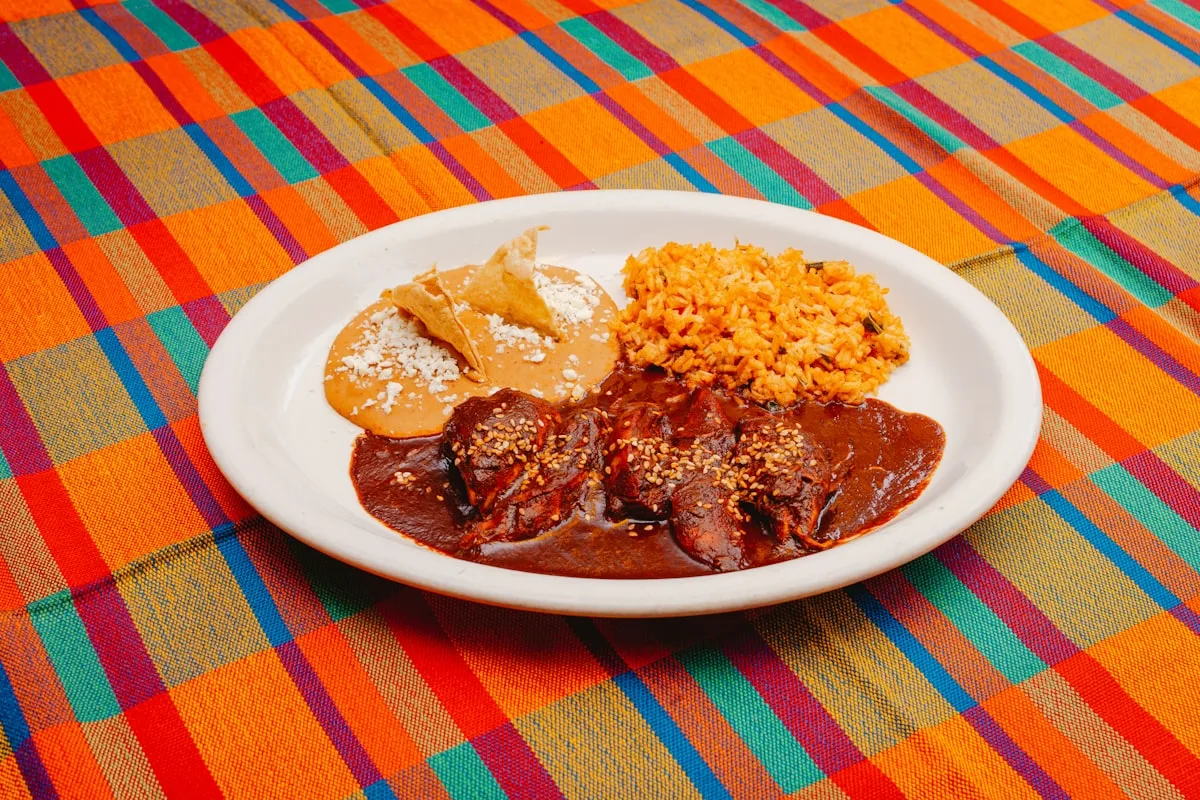
- Serve with red rice, tortillas and toasted sesame on top.
Result: 80% of the flavour of the homemade version with 10% of the effort. It is an excellent introduction to the world of mole.
Serving and Storing
- Classic accompaniment: Chicken (breast or thigh), turkey (for Day of the Dead and Christmas), or mole enchiladas.
- Side: White or red rice. Warm corn tortillas.
- Decoration: Toasted sesame seeds and onion rings.
- Storage: Mole improves with resting. Store in the fridge for up to 2 weeks. It freezes for up to 6 months without losing flavour. Thaw and heat, adding broth.
Where to Find Ingredients in the UK
- Dried chillies: Latin shops and Amazon.
- Mole paste: Latin shops (£2.60-4.30). It is the most accessible way to enjoy mole in the UK.
- Mexican chocolate: Latin shops (Ibarra or Abuelita, £2.60-3.40). Substitute: 70% dark chocolate + cinnamon + sugar.
- Spices: All in Tesco or health-food shops.
- Nuts: All in any supermarket.
Mole is more than a dish - it is an act of culinary love, a living heritage that connects generations. Try our complete recipe when you are ready for the adventure, or start with the commercial paste and fall in love with the flavour. Either way, mole will change your perception of what cooking can achieve.
Beyond Poblano: Regional Moles You Should Know
Mole poblano is the most famous, but Mexico has dozens of regional variants that deserve attention. In our experience exploring Mexican gastronomy in depth, these are the moles that have most impressed us outside the orbit of the classic poblano:
Black mole from Oaxaca: Considered by many cooks to be the most complex mole that exists. Its secret is the black chilhuacle chilli, which is partially burnt before use, contributing a controlled bitterness and an almost mystical depth. It also contains toasted avocado leaf, which gives it a very particular anise aroma. In the UK it is practically impossible to get black chilhuacle, but if you ever visit Oaxaca, ordering it is a must.
Pipián verde: A mole of pumpkin seeds with fresh herbs (coriander, epazote, hoja santa) and green chilli. It is fresh, herbal and with a silky texture from the natural fat of the seeds. It is much easier to make than mole poblano and the ingredients are found in the UK without any problem. Pumpkin seeds are sold in Tesco for about £2.60 per 200g.
Mole de olla: Technically it is a broth - a beef stew with vegetables (chayote, corn, squash, green beans) in a red broth of guajillo and ancho chilli. It is the everyday mole, comforting and nutritious, that Mexican families make during the week. In the UK it can be made perfectly with stewing beef from Tesco (£4.30-5.10/kg) and the seasonal vegetables available.
Mole in Mexican Culture: Social Ritual and Family Heritage
In Mexico, making mole is not an individual act - it is a community event called a "moleada". The women of the family (and increasingly the men) gather the day before a celebration to prepare the mole together. Each person has their assigned role: someone toasts the chillies, another fries the ingredients, someone else grinds on the metate or blends, and the matriarch supervises and adjusts the flavours. It is a ritual that strengthens family ties and passes on culinary knowledge from generation to generation.
Every family's mole recipe is unique. Although the basic ingredients may be similar, the exact proportions, the toasting times and the little secrets vary from family to family. We have spoken with dozens of Mexican cooks in the UK and each one insists that their family recipe is the best, and they are probably all right - because the tastiest mole is always the one that connects you with your personal history.
For Mexicans living in the UK, making mole is an act of cultural resistance. It is the way to keep alive the connection with the homeland, especially on important dates such as the Day of the Dead, weddings or birthdays. The aroma of mole cooking in a kitchen in Madrid or Barcelona instantly transports you to Puebla, Oaxaca or grandmother's house.
Mole and Health: Surprising Nutritional Value
Despite its reputation as a heavy dish, mole has quite an interesting nutritional profile. The chillies provide vitamins A and C, as well as capsaicin with anti-inflammatory properties. The nuts and seeds provide healthy fats, proteins and minerals such as magnesium and zinc. Dark chocolate is rich in antioxidants and theobromine. The spices have recognised digestive properties.
The calorie problem with mole is not in the sauce itself, but in the lard with which it is traditionally fried and in the amount served. In our experience, you can make a lighter mole using olive oil instead of lard (you lose a little flavour but gain in health) and by controlling the portions. A moderate portion of mole with chicken breast and rice comes to around 450-500 kcal - perfectly reasonable for a main meal.
Shopping Guide for Mole in the UK: A Detailed Budget
For those who want to attempt mole from scratch in the UK, this is the cost breakdown we have calculated based on current prices:
- Dried chillies (ancho + guajillo + chipotle): £6.80-8.50 in Latin shops (buy the three varieties separately)
- Mexican chocolate (Ibarra/Abuelita tablet): £2.60-3.40 in a Latin shop. Alternative: Tesco 85% cacao chocolate (£1.70) + a cinnamon stick
- Almonds + peanuts + sesame + raisins: £4.30-5.10 in Tesco (the loose nuts section is the most economical)
- Spices (cinnamon stick, clove, pepper, cumin): £2.60-3.40 if you do not already have them at home
- Tomatoes + onion + garlic + plantain: £2.60-3.40
- Chicken to serve (2kg thighs or breasts): £6.80-10 in Tesco
Total: £26-34, but it is enough for 12-15 generous portions. If you freeze half the mole (it freezes perfectly for up to 6 months), you have two extraordinary meals for about £1.70-2.60 per person each. Compared with ordering mole in a Mexican restaurant (£12-15 per plate), cooking at home is tremendously economical. And if you are missing a specific ingredient, check our guide to Mexican shops in the UK to find the nearest supplier.

Founder, Recetas Mexas
Mexican from Puebla, IT professional and foodie. Author of 1000+ authentic Mexican recipes adapted for home kitchens worldwide. Based in Madrid since 2018.
Read more