Agua de melón: what's in it, recipe and a touch of chia

Edmond Bojalil · Founder, Recetas Mexas
Updated: 15 Nov 2026

What is it?
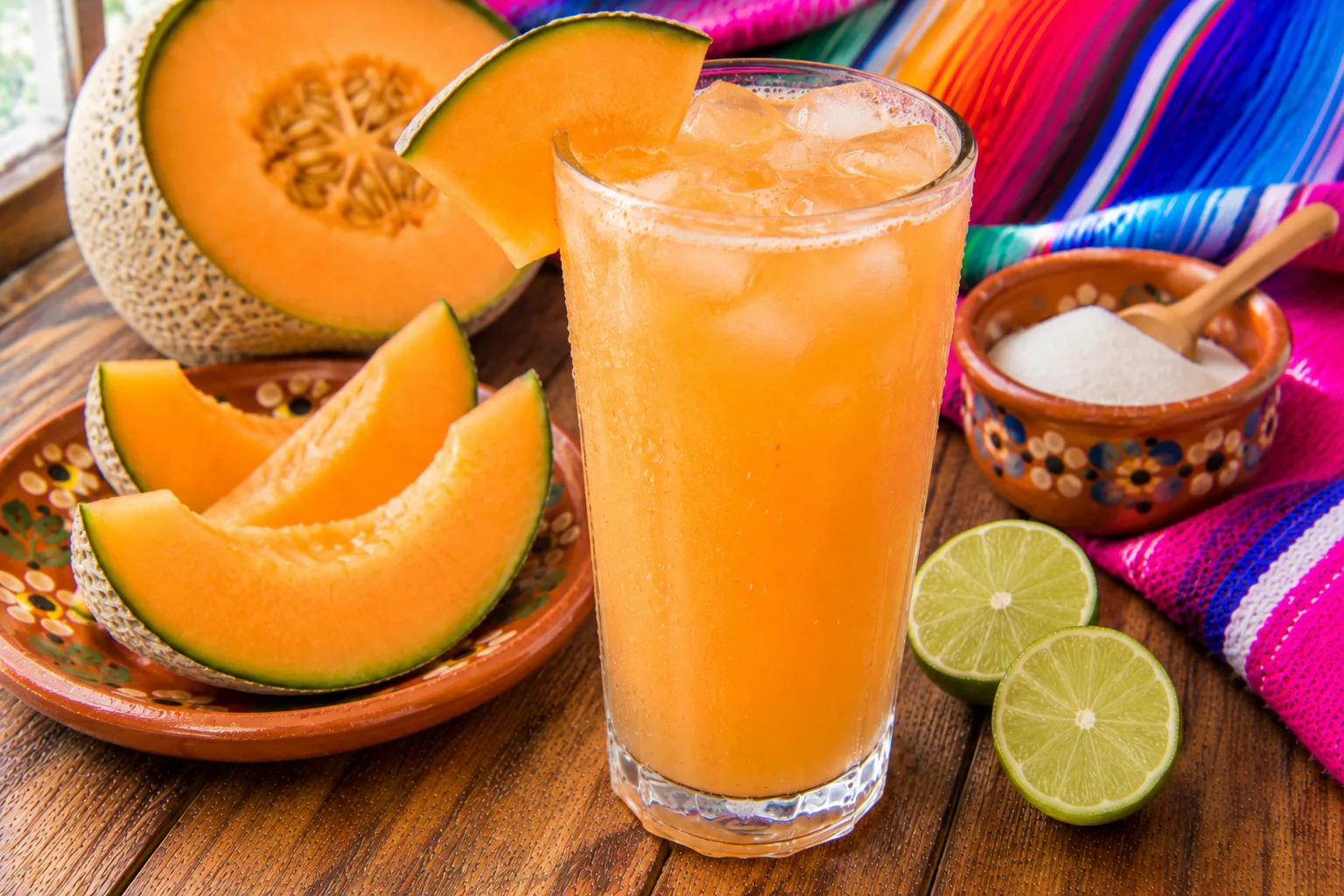
Agua de melón is a pale yellow or soft orange Mexican agua fresca made with ripe melon pulp blended with water and sugar to taste. It is gently sweet and slightly honeyed, with no acidity, and very hydrating. It is made with cantaloupe or green-white-fleshed melon and served ice-cold.
It forms part of the everyday repertoire of aguas frescas served in Mexican fondas, markets and restaurants throughout the warm season. It is one of the most palate-friendly aguas frescas, without acidity or intense flavours, which makes it especially popular among children and people who prefer mild drinks. It is prepared with cantaloupe melon (also called simply melon in Mexico) or green-white-fleshed melon (honeydew or Valencian type), both widely cultivated in northern states such as Sonora, Coahuila and Durango.
Origin and history
The melon (Cucumis melo) is native to tropical Africa or Asia, depending on the study, and has been cultivated for millennia. It was present in Egypt, Greece and Rome before spreading throughout Europe during the Middle Ages. It reached New Spain with the Spanish in the sixteenth century; the warm, semi-arid climate of northern Mexico proved ideal for its cultivation. Today Mexico is a significant producer and exporter, especially in La Laguna (Coahuila-Durango), Sonora and Guerrero. Agua de melón became popular as commercial cultivation expanded and extended the fruit's availability. It is a typically urban drink in its current version, present in all popular fondas and restaurants, although it also has a strong rural presence in producing areas where the farming family consumes it throughout the summer harvest season.
Characteristic ingredients
Ripe melon is the only essential ingredient. Cantaloupe melon (orange pulp) or green-white-pulp melon (honeydew or Valencian) is preferred; the former is more aromatic and sweet, the latter fresher and lighter. It should be ripe but firm; if it is overripe it may provide undesirable fermented notes. It is cut in half, the seeds are removed with a spoon and the pulp is separated from the rind. The pulp is blended with cold water and sugar; some recipes add lime juice to enhance the flavour or citrus zest for aromatic variants. The usual proportion is the pulp of half a medium melon per two litres of water. It is generally not strained because the blended pulp gives a pleasant creamy texture, but it can be strained for a lighter drink. Popular variants: agua de melón with hydrated chia (very popular in recent years); agua de melón with evaporated milk for a creamy version; melon chamoyada with chilli and chamoy on the rim. It is served very cold with ice and is best consumed the same day because the pulp oxidises quickly.
Cultural significance
Agua de melón is one of the everyday pillars of Mexican aguas frescas, part of the basic menu of fondas and restaurants that defines the popular gastronomic experience of the country. It is an indispensable drink during the warm months of March to September, when the heat in much of Mexican territory makes hydration a priority. The melon industry sustains important rural economies: La Laguna, Sonora and Guerrero concentrate a large share of national production. Beyond its national consumption, Mexico exports fresh melon to the United States and Canada, gaining an international reputation as a quality supplier. Agua de melón is one of the most popularly consumed derived products, alongside ice lollies, smoothies and fruit cocktails that abound in markets and kiosks.
Related recipes
Now that you know what it is, try cooking it at home with our step-by-step recipes:

Ingredients to cook it
Find where to buy authentic ingredients in Mexican shops in the UK:
Where to try it
Prefer to eat out? Discover authentic Mexican restaurants across the UK.
Explore Mexican restaurantsMore guides in this category
- Agua de pepino con limón: what it is, recipe and benefits
- Agua de tamarindo: what it is and how to make it
- Atole de cajeta: what it is and how to make it
- Atole de chocolate: what it is and how to make champurrado
- Atole de elote: what it is and how to make it step by step
- Atole de fresa: what it is and how to make the creamy drink
Frequently asked questions
- What does agua de melón taste like?
- It tastes gently of fresh ripe melon, with a floral sweetness and a slightly honeyed background. It is one of the most palate-friendly aguas frescas: neither tart nor intense, simply refreshing and sweet. It recalls natural melon juice but lighter and more drinkable. Its neutral flavour makes it ideal to accompany any meal and especially appreciated by children and people with a sensitive palate.
- What is the difference between cantaloupe and Valencian melon?
- The cantaloupe has orange pulp, a netted skin and an intense aroma; it is sweeter and more aromatic. The green-white-fleshed melon (honeydew or Valencian) has a smooth skin and a mild aroma; it is fresher and lighter. In Mexico both are called simply melon. For agua fresca the cantaloupe gives more flavour and colour; the Valencian gives more subtle and refreshing results ideal for very hot climates.
- Can it be made with chia?
- Yes, adding two tablespoons of chia previously hydrated in water for twenty minutes to the finished agua de melón is a very popular variant in recent years. It provides a characteristic grainy texture, omega-3, fibre and minerals. The chia does not significantly alter the flavour of the melon and nutritionally enriches the drink. It is advisable to shake before serving because the chia settles to the bottom of the container.
- How do you choose a good melon?
- A good melon should have a firm but slightly soft skin at the base where the stem was, a perceptible sweet aroma when smelled, and feel heavy for its size. A ripe cantaloupe shows well-defined netting on its skin. Melons with dark spots, bruises or a fermented aroma are avoided. Once cut it should be consumed within a maximum of three days refrigerated in an airtight container.
Sources
Founder, Recetas Mexas
Mexican from Puebla, IT professional and foodie. Author of 1000+ authentic Mexican recipes adapted for home kitchens worldwide. Based in Madrid since 2018.
Read moreEnjoyed this?
Follow on TikTok for Mexican recipe & restaurant videos, and get updates by email.