Mexican Christmas: what’s eaten from the posadas to Three Kings’ Day

Edmond Bojalil · Founder, Recetas Mexas
Updated: 15 Nov 2026

What is it?
Mexican Christmas is a season, not a single dinner: it begins on 12 December with the Day of the Virgin of Guadalupe, continues with the nine posadas, peaks at the Christmas Eve dinner (Nochebuena) and closes with the rosca de Reyes on 6 January and the Candlemas tamales on 2 February.
Each date has its food, and many are linked: whoever finds the figurine in the rosca pays for the February tamales, and what is left over from the dinner on the 24th becomes the next day’s tortas.
This guide goes through that calendar date by date and brings together the recipes for each moment: the fruit ponche and tamales of the posadas, bacalao a la vizcaína, romeritos, roast pork leg or pork loin and the Christmas Eve salad, buñuelos with piloncillo syrup, champurrado and the rosca de Reyes. Use it to plan the menu ahead of time, whether you are in Mexico or in any other country.
Origin and history
The season blends the Catholic liturgy that arrived with the 16th-century evangelisation with ingredients and techniques from Mesoamerica. The posadas go back to the misas de aguinaldo (Christmas masses) that Augustinian friars celebrated at San Agustín Acolman, in what is now the State of Mexico, between 16 and 24 December; the date usually cited is 1587. Over time they moved from the church to neighbourhoods and homes, with a procession, a litany to ask for lodging (pedir posada), a piñata and shared food. The Christmas Eve menu is just as mixed. Dried salt cod, pork, the wheat of buñuelos and the rosca, sugar cane and dried fruit came from Europe; the maize of tamales and atole, chocolate, turkey (guajolote), tomatoes, chillies and quelites (wild greens) such as romeritos are American. Bacalao a la vizcaína, which in Spain is cooked with choricero peppers, is made in Mexico with tomato, olives, capers and güero chillies. The rosca de Reyes comes from the European Epiphany bread, and in Mexico it hides figurines of the Christ Child that oblige whoever finds one to treat everyone to tamales on 2 February, Candlemas Day.
Characteristic ingredients
12 December, Virgin of Guadalupe: parishes and pilgrimages hand out tamales and atole, and many homes make pozole or buy buñuelos. 16 to 24 December, posadas: hot fruit ponche (guava, apple, sugar cane, tamarind, prunes and, depending on the recipe, tejocote and hibiscus flowers, sweetened with piloncillo and cinnamon), with a piquete (a shot) of rum, brandy or tequila for adults; red, green, rajas (chilli strips) or sweet tamales; champurrado or atole; buñuelos with piloncillo syrup; and aguinaldos for the children, with fruit, peanuts and sweets. 24 December, Christmas Eve (Nochebuena): the family dinner. The dishes that appear most often are bacalao a la vizcaína, romeritos in mole with prawn fritters (especially in central Mexico), adobo-marinated pork leg or pork loin in prune sauce, stuffed turkey and the Christmas Eve salad with beetroot, apple, orange, jícama, pomegranate and peanuts. To drink there is ponche, rompope or cider. 25 December: the recalentado. Leftover pork leg goes into tortas, the bacalao into tacos or tortas, and the romeritos are reheated. 31 December and 1 January: the New Year dinner repeats much of the Christmas Eve menu, and at midnight people eat twelve grapes. 6 January, Three Kings’ Day: rosca de Reyes with candied fruit and a sugar crust, served with hot chocolate or atole. 2 February, Candlemas: tamales and atole, paid for by whoever found the figurine.
Cultural significance
December food in Mexico is food for sharing, and so is the work. A tamalada brings several people together to make dozens of tamales in an afternoon; the salt cod is desalted a day or two in advance; the ponche is made in large pots because it is served to whoever turns up. That is why many recipes of the season are designed for eight, ten or more people and can be made ahead. It is also a cuisine that travels: in the United States, Spain and other countries with a Mexican community, the posadas and the Christmas Eve dinner carry on with whatever can be found locally, such as masa harina instead of fresh masa, prunes and apple when there is no tejocote, or supermarket salt cod. These dates are one of the times of year when people cook at home the most.
Related recipes
Now that you know what it is, try cooking it at home with our step-by-step recipes:

Christmas Punch

Green Chicken Tamales

Red Pork Tamales

Chilli and Cheese Tamales

Sweet Tamales

Champurrado (Chocolate Atole)

Buñuelos
Mexican-Style Salt Cod

Romeritos in Mole

Slow-Roasted Pork Leg

Pork Loin in Prune and Chilli Sauce

Mexican Christmas Turkey

Christmas Eve Beetroot Salad

Mexican Christmas Apple Salad

Christmas Ponche with a Kick

Rompope (Mexican Eggnog)

Roast Pork Leg Sandwich Mexico City-Style

Three Kings Cake

Oaxacan Hot Chocolate with Water
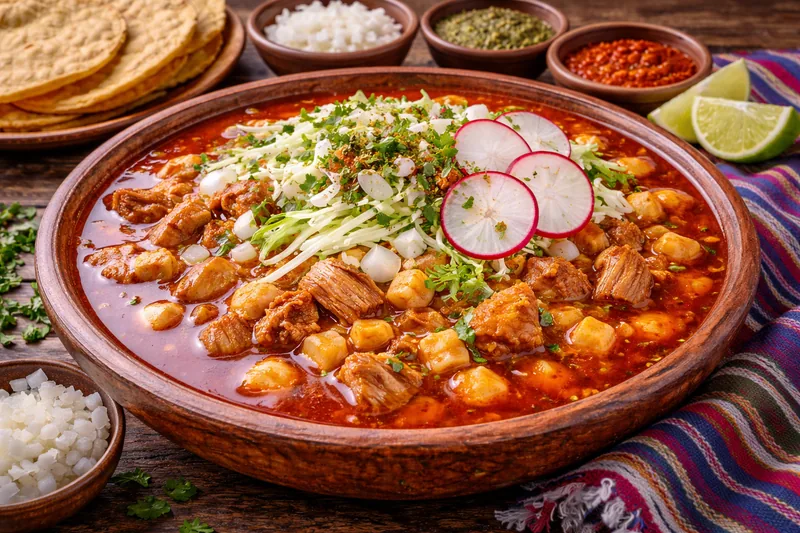
Red Pozole

Chocolate Atole

Dulce de Tejocote (Mexican Hawthorn Compote)
Ingredients to cook it
Find where to buy authentic ingredients in Mexican shops in the UK:
Where to try it
Prefer to eat out? Discover authentic Mexican restaurants across the UK.
Explore Mexican restaurantsMore guides in this category
- Mexican Lenten food: what is eaten and why
- Mole de olla: what it is, what's in it and where it's from
- Mucbipollo: what it is and how the Yucatecan pib is made
- Pan de muerto: what it is, symbolism and regional types
- Posada food: what is served at the Mexican posadas
- Romeritos: what they are, how to cook them and when
Frequently asked questions
- What do Mexicans eat on Christmas Eve?
- It depends on the region and the family, but the most common dishes are bacalao a la vizcaína, romeritos in mole with prawn fritters, adobo-marinated pork leg or pork loin in prune sauce, stuffed turkey and the Christmas Eve salad. To drink, fruit ponche, rompope or cider, and buñuelos for dessert.
- What is the difference between a posada and Nochebuena?
- The posadas are nine celebrations, from 16 to 24 December, with a procession, a piñata and simple food for many people: ponche, tamales, atole and buñuelos. Nochebuena is the family dinner on 24 December, with a more elaborate menu of bacalao, romeritos, pork leg or turkey.
- What is the recalentado?
- It is the meal on 25 December (and on 1 January) made with the leftovers from the dinner: pork leg tortas, bacalao tacos or tortas, and reheated romeritos. Many families cook extra on the 24th precisely to have it.
- Why are tamales eaten on 2 February?
- Because whoever finds a figurine of the Christ Child when the rosca de Reyes is cut on 6 January is committed to providing tamales and atole on Candlemas Day, 2 February, which closes the Christmas season.
- What goes into Mexican Christmas ponche?
- Fruit simmered in water with piloncillo and cinnamon: guava, apple, pear, sugar cane, tamarind and prunes, and in many recipes tejocote and hibiscus flowers. It is served hot and, for adults, rum, brandy or tequila can be added (the ‘piquete’).
- What can be made ahead for Christmas dinner?
- The salt cod is put to desalt one or two days before, the pork leg is left marinating in the adobo from the day before, the tamales can be made and frozen, and the mole for the romeritos can be prepared the day before. The ponche and the salad are made on the day.
Sources
Founder, Recetas Mexas
Mexican from Puebla, IT professional and foodie. Author of 1000+ authentic Mexican recipes adapted for home kitchens worldwide. Based in Madrid since 2018.
Read moreEnjoyed this?
Follow on TikTok for Mexican recipe & restaurant videos, and get updates by email.