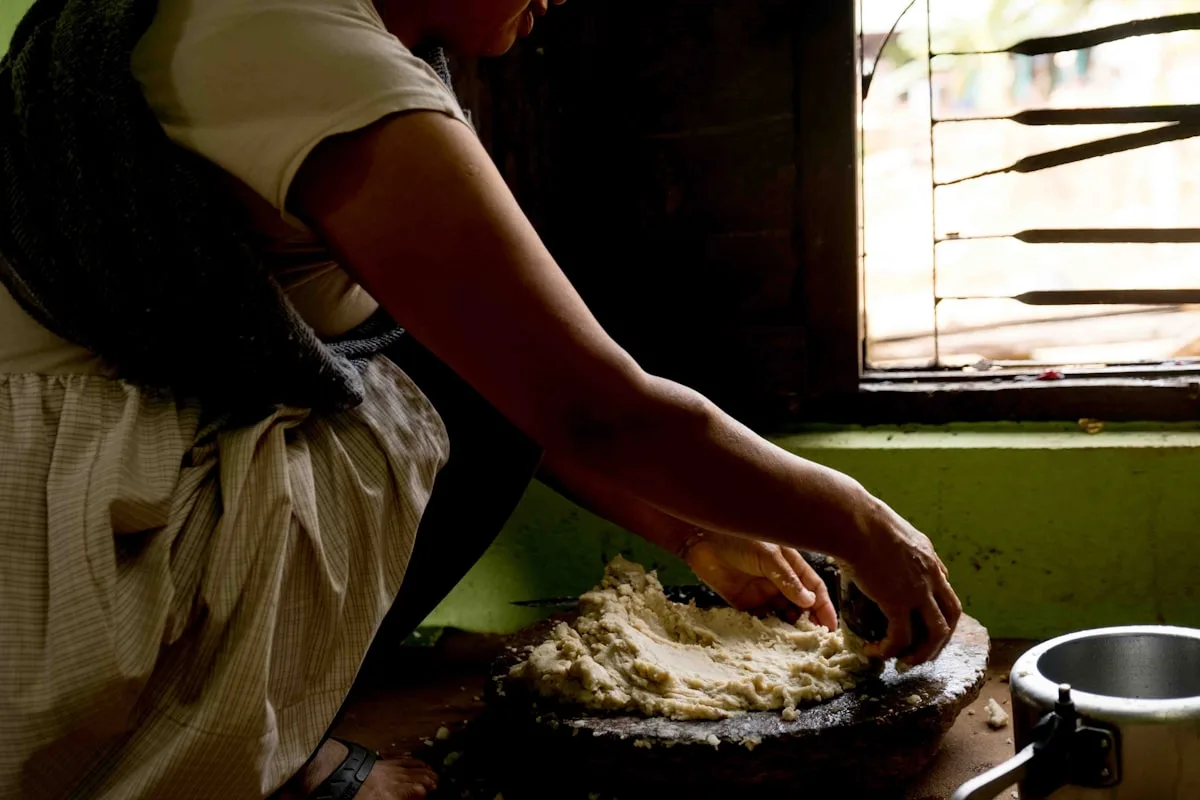
How to Make Corn Tortillas at Home
Step-by-step guide to making authentic corn tortillas at home with masa harina and simple equipment.
Home-made corn tortillas are incomparably better than any shop-bought version. The aroma of fresh corn, the soft yet substantial texture, that flavor that transports you straight to Mexico... Once you make them at home, you won't want to go back to the packet ones. And the good news is that making them is far easier than you think.
What You Need
The ingredients are minimal: just two things.
- Nixtamalized corn flour (Maseca): 2 cups (about 250g). Find it in Latin shops for $5-5 a kilo, or on Amazon. Important: it must be nixtamalized - Italian polenta and ordinary cornmeal won't do.
- Warm water: about 1.5 cups (the exact amount varies with the day's humidity).
- Salt: half a teaspoon (optional but recommended).
Equipment: Press or Rolling Pin?
The tortilla press is the traditional tool and the one that gives the best results. You can find them on Amazon for $20-35 (search for "tortilla press"). The cast-iron ones are the best because their weight does the work for you.
Alternative without a press: a rolling pin and two pieces of plastic (a cut-up freezer bag works perfectly). Place the ball of masa between the plastic and flatten with the rolling pin. It takes more practice but works well.
Pro tip: you can also use two chopping boards. Put the masa between plastic, place the board on top and press with your hands. It's surprisingly effective.
Detailed Step by Step
1. Prepare the Masa (5 minutes)
Put the flour in a large bowl. Add the warm water gradually as you mix with your hands. The key is adding the water bit by bit - it's easier to add than to take away.
The right texture: the masa should feel like soft Play-Doh. If it cracks when you press it, it needs more water. If it sticks to your hands, it has too much. Make a little ball and press it: if the edges crack, add another tablespoon of water and knead.
Let the masa rest for 5 minutes covered with a damp cloth. This lets the flour absorb all the water evenly.
2. Form the Balls
Divide the masa into golf-ball-sized portions (about 35-40g each). This amount of masa makes around 15-16 tortillas. Keep them covered with the damp cloth while you work so they don't dry out.
3. Flatten the Tortillas
Line your press with plastic on both sides (this stops it sticking). Place a ball in the center, close and press firmly but not brutally. Open, peel off carefully and you're done.
Ideal thickness: about 2mm. Not so thin that they break, nor so thick that they end up like gorditas (unless you want to make gorditas, of course).
Common mistake: pressing too hard. The tortilla ends up so thin it breaks when you peel it. Keep trying until you find your sweet spot.
4. Cook on a Comal or Pan
This is the step where many people go wrong, so pay attention:
The comal: if you don't have a comal (the flat Mexican griddle), use a cast-iron pan or a non-stick pan. Heat it over a medium-high heat with NO oil or butter.
First turn: place the tortilla and wait 60-90 seconds. You'll see the edges start to dry slightly. Turn it over.
Second turn: another 60-90 seconds. This is when it should start to puff up (if it puffs, you're on the right track - it means the masa is well hydrated). If it doesn't puff, don't worry, it'll still be good.
Third turn (optional): 15-20 seconds more. If you press lightly with a spatula, you help it puff.
Pan temperature: if the tortilla burns in less than 30 seconds, lower the heat. If it takes more than 2 minutes to cook, turn it up. The exact point depends on each kitchen.
5. Keeping Them Warm
Wrap the finished tortillas in a clean tea towel or in a tortilla warmer (found in Latin shops or on Amazon for $10-15). The steam they release keeps them soft and warm for up to 30 minutes.
Common Mistakes and How to Avoid Them
- Masa that cracks: it needs more water. Add a tablespoon, knead well and try again.
- Sticky masa: it has too much water. Add flour a little at a time.
- Tortillas that break when you turn them: they're too thin or the pan isn't hot enough.
- Tough tortillas: they were cooked too long or over too low a heat. They should be flexible.
- They don't puff: the masa was dry, the pan wasn't hot enough, or the tortillas are too thick. It's not the end of the world - they're still edible.
Variations and Ideas
Blue corn tortillas: use nixtamalized blue corn flour (harder to find, but some Latin shops have it). The flavor is more intense and the color is spectacular.
Tortillas with herbs: add finely chopped cilantro or ground dried chile to the masa for extra-flavored tortillas. Perfect for tacos al pastor.
Home-made tortilla chips: cut leftover (or day-old) tortillas into triangles and fry them in hot oil for 2-3 minutes. Salt them as they come out. They're a thousand times better than bought ones and perfect for chilaquiles.
How Many to Make and How to Store Them?
Quantity: reckon on 4-5 tortillas per person for tacos, 3-4 as a side.
Fridge: they last 3-4 days in a freezer bag. Reheat them in a dry pan before serving.
Freezer: separate with parchment paper and freeze in a bag. They last up to 3 months. Defrost at room temperature or directly in the pan.
Where to Buy the Flour in the US
Maseca flour (the leading brand) is found in:
- Latin shops: the cheapest option ($5-5/kg). In London and other large cities, practically any Latin shop.
- Amazon: Maseca 1kg for around $5-5 with Prime delivery.
- Larger supermarkets: some big stores have an international section with Maseca.
- Online: MexGrocer and other specialist shops have several brands.
Making corn tortillas at home is one of those simple pleasures that completely transform your experience with Mexican cooking. The first time takes a little longer, but after 2-3 attempts you'll make them on autopilot. And the aroma that fills your kitchen is priceless. Give it a go this weekend!
The Science of Nixtamal: Why It Matters
Nixtamal is the ancestral process that distinguishes a good tortilla from a simple disc of corn. The Aztecs discovered more than 3,500 years ago that cooking corn with lime (calcium oxide) completely transformed the grain: the outer layer softens, the proteins become more digestible and niacin (vitamin B3) is released - an essential nutrient that otherwise stays locked in the grain.
When you buy Maseca or another nixtamalized brand, that process is already done. That's why it's vital not to substitute it with polenta, arepa cornmeal or cornstarch. Each has a different treatment that affects flavor, texture and nutritional value. If you want to go a step further, some Latin shops sell fresh nixtamalized masa - ask directly, because it isn't always on display. The price is around $5-5 a kilo and the result is noticeably superior to reconstituted flour.
Tortillas for Different Dishes
Not all tortillas should be the same. Depending on what you're making, it's worth adjusting the thickness and size:
- For tacos: small tortillas (12-14 cm diameter), thin (1.5-2 mm). They need to be flexible to fold without breaking. Ideally use a double tortilla per taco, as they do in Mexico.
- For enchiladas: medium size (15-16 cm), medium thickness. They must hold the salsa without falling apart but be thin enough to roll.
- For tostadas: thin and large (16-18 cm). Fried or baked until crisp. A trick: bake them at 180°C for 12-15 minutes, turning halfway, for a lighter version than the fried one.
- For quesadillas: a little thicker (3 mm) and large. In central Mexico, quesadillas are made with raw masa that's filled before cooking - an advanced level worth trying.
- For sopes and gorditas: much thicker (5-6 mm). Cooked first, the edges pinched to form a rim and then lightly fried. They're another way to enjoy the same masa.
Price Comparison: Home-Made vs Bought
Making tortillas at home isn't just better in flavor, it's also significantly cheaper if you eat them often:
- Supermarket tortillas (Old El Paso and similar): $5.50-2.50 for 8 flour ones. Corn ones are harder to find and cost $5.50-3.50 for 8.
- Home-made tortillas with Maseca: 1 kg of flour ($5-5 in a Latin shop) makes around 30-35 tortillas. Cost per tortilla: under $5.10.
- Artisanal tortillerías (if you're lucky enough to live near one): $5-10/kg. Excellent quality, but a high price for daily use.
If your family eats tortillas several times a week, the difference over a year is noticeable. What's more, home-made ones contain no preservatives or additives - just corn, water and salt.
Advanced Troubleshooting
After making tortillas a few times, you may run into these more specific problems:
- Tortillas that come out oval: the ball of masa isn't centred in the press, or the pressure isn't even. Try rotating the masa 180 degrees and pressing a second time.
- Irregular or cracked edges: the masa needs more kneading. Work it for at least 2 minutes before forming balls.
- Bitter or raw flavor: insufficient cooking. Each side needs at least 60 seconds. Golden spots are a sign of good cooking.
- They stick to the plastic: the plastic is too thin or has creases. Use thick freezer bags and make sure they're completely smooth.
With practice, you can have 15-20 freshly made tortillas in 20 minutes. It's a ritual many Mexican families do daily, and once you bring it into your routine, it becomes almost meditative.

Founder, Recetas Mexas
Mexican from Puebla, IT professional and foodie. Author of 1000+ authentic Mexican recipes adapted for home kitchens worldwide. Based in Madrid since 2018.
Read more