Caldo tlalpeño: what it is and how to make the soup

Edmond Bojalil · Founder, Recetas Mexas
Updated: 10 Sept 2026
What is it?
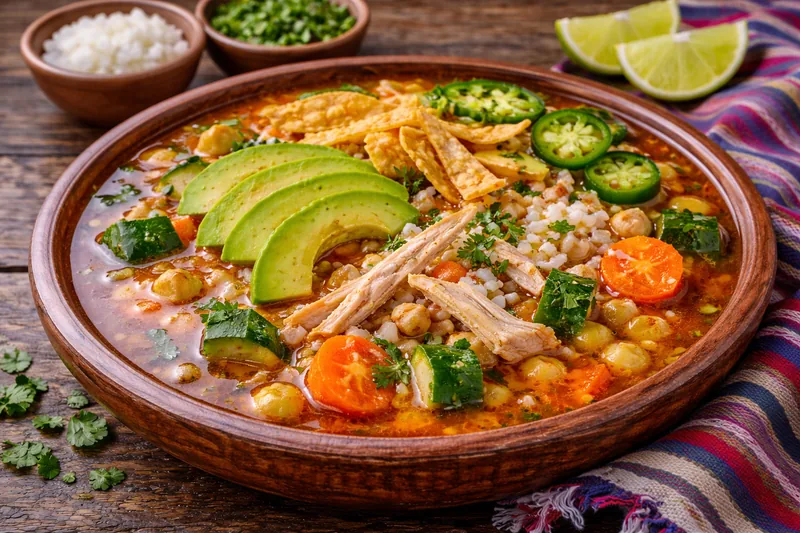
Caldo tlalpeño is a classic Mexican soup born in the Tlalpan borough, in the south of Mexico City. Its base is a home-made chicken broth to which shredded chicken, cooked chickpeas, carrot, courgette, coriander and the dish's signature are added: chipotle chillies in adobo, which provide smokiness and heat. It is served topped with diced avocado, crumbled panela or fresh cheese, a sprig of epazote and a few drops of lime. It is a comforting spoon soup, popular in eateries, canteens and traditional cuisine restaurants of the capital. Larousse Cocina describes it as one of the most representative broths of the Valley of Mexico, ideal for cold days. It usually appears on set menus as a starter soup accompanying stews, rice dishes, or as a single dish with hot tortillas and salsa to taste.
Origin and history
Caldo tlalpeño was born in the town of Tlalpan at the end of the nineteenth century or the beginning of the twentieth, when this place was still a rural village on the outskirts of Mexico City. The most widespread account - recorded by Larousse Cocina and Adriana's Best Recipes - attributes its creation to the cooks who fed the passengers of the mule-drawn tram and later the electric one that linked Tlalpan with the centre of the capital. The broth was offered hot, with tortillas, at strategic stops. The recipe became established when the chefs of the area's restaurants, especially around the Tlalpan square, formalised the combination of chicken, chickpea and chipotle. By the mid-twentieth century, books such as the Diccionario Enciclopédico de la Gastronomía Mexicana record it as part of the classic Mexico City repertoire. Nestlé Mexico, Larousse Cocina and gastronomic publications such as Adriana's Best Recipes agree in pointing to Tlalpan as its indisputable origin.
Characteristic ingredients
The base is a well-seasoned chicken broth, made with legs, thighs and bones boiled together with onion, garlic and herbs. Once strained, shredded chicken and previously soaked and cooked chickpeas are added —some cooks use dried chickpeas from the night before, others tinned ones for quick versions. The classic vegetables are diced carrot, courgette and sometimes green beans. The soul of the broth is the chipotle chilli in adobo: one or two whole chillies are added so that the broth takes on an amber colour and a characteristic smoky, spicy flavour. The fresh epazote is incorporated in the last few minutes. To serve, each bowl is assembled with diced avocado, crumbled panela or fresh cheese, lime to taste and a sprig of coriander or epazote. Some modern versions use melted Oaxaca cheese at the bottom of the bowl or add white rice as a separate dry soup.
Cultural significance
Caldo tlalpeño is one of the most representative broths of Mexico City cuisine and an example of the mestizaje of the Valley of Mexico: it combines the chicken broth of colonial origin with the pre-Hispanic chipotle smoked in a wood-fired chamber. It is considered a comforting dish associated with the 'worker's rest' and appears in eateries, markets and traditional restaurants such as Café de Tacuba or La Casa de los Tacos. In 2010, UNESCO declared traditional Mexican cuisine Intangible Cultural Heritage of Humanity, and soups such as caldo tlalpeño form part of the repertoire that underpins that declaration. The Tlalpan borough promotes the dish at its gastronomic fairs as a local icon. It is also common on Lenten menus, replacing the chicken with mushrooms or vegetables, in vegetarian versions that keep the chipotle as the backbone. Its popularity has crossed borders thanks to chefs such as Pati Jinich and Aarón Sánchez, who have brought it to international television.
Related recipes
Now that you know what it is, try cooking it at home with our step-by-step recipes:

Ingredients to cook it
Find where to buy authentic ingredients in Mexican shops in the US:
Frequently asked questions
- What is the difference between caldo tlalpeño and ordinary chicken broth?
- Chicken broth is a neutral base of chicken and vegetables. Caldo tlalpeño starts from that base but adds three identity elements: cooked chickpeas, chipotle chilli in adobo —which provides smokiness and heat— and, when served, avocado and panela cheese. The epazote and lime round off the profile. Without chipotle it is not tlalpeño.
- What does caldo tlalpeño taste like?
- It tastes of deep chicken broth with a smoky, spicy undertone from the chipotle, the earthy sweetness of the chickpea and the freshness of avocado and lime. The panela cheese provides a soft creaminess and the epazote a herbal touch characteristic of central Mexico. The heat is balanced: it is felt, but does not overpower the broth.
- How is caldo tlalpeño served?
- It is served very hot in a deep bowl. Diced avocado and crumbled panela or fresh cheese are placed at the bottom; the broth with chicken, chickpeas and vegetables is poured on top. It is garnished with epazote or coriander, accompanied by lime, hot salsa to taste and hot tortillas. In Mexico it is offered as a starter soup or as a light single dish.
- Where does caldo tlalpeño come from?
- It is native to Tlalpan, a borough in the south of Mexico City. It became popular at the end of the nineteenth and beginning of the twentieth century among the cooks who fed the passengers of the tram that connected Tlalpan with the centre of the capital. Today it is one of the most emblematic broths of Mexico City cuisine and is consumed throughout the country.
Sources
Founder, Recetas Mexas
Mexican from Puebla, IT professional and foodie. Author of 1000+ authentic Mexican recipes adapted for home kitchens worldwide. Based in Madrid since 2018.
Read moreEnjoyed this?
Follow on TikTok for Mexican recipe & restaurant videos, and get updates by email.