Chilaquiles: the Mexican breakfast explained

Edmond Bojalil · Founder, Recetas Mexas
Updated: 2 Sept 2026
What is it?
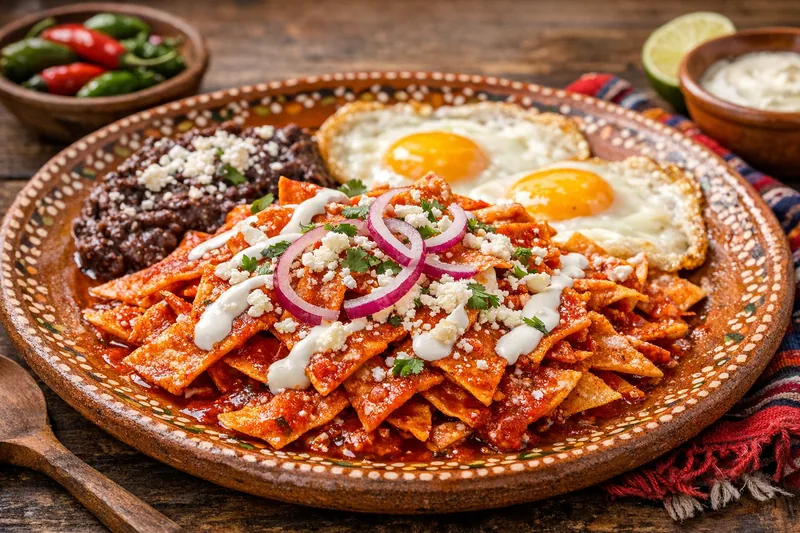
Chilaquiles are a Mexican breakfast or brunch dish made with fried maize tortilla chips (totopos) bathed in red, green or mole salsa, briefly simmered so they soften without falling apart, and served with cream, crumbled fresh cheese, sliced onion and, optionally, shredded chicken or egg on top. The name comes from the Nahuatl chilaquilitl, meaning "herbs or vegetables in chilli". They are one of the most popular breakfasts in the country, found everywhere from humble fondas to luxury hotels, and they are one of the main uses for tortilla chips, a role that also gives them a key part in reducing food waste in home cooking.
Origin and history
Chilaquiles have a pre-Hispanic origin: they appear documented in Sahagun's Florentine Codex as chilaquilitl, a preparation of tortillas passed through chilli salsa that the Aztecs served in the markets of Tenochtitlan. The recipe survived the Conquest practically unchanged because it only combined native ingredients: maize, chilli, salt and water. In the 19th century they appear in the first printed Mexican cookbook, the Cocinero Mexicano of 1831, already with the modern formula of fried tortilla, salsa, cream and cheese. By the late 19th and early 20th century they became popular as a bourgeois breakfast and as a hangover remedy in cantinas and fondas. Today they are one of the iconic breakfasts of Mexico City, Guadalajara and practically any city in the country, with countless regional variants.
Characteristic ingredients
The key ingredient is the totopo: triangles of nixtamalised maize tortilla, ideally from the day before so they fry crisper. The salsa can be red (tomato, guajillo or ancho chilli), green (tomatillo, serrano or jalapeno chilli and coriander) or mole poblano. After bathing the totopos they are simmered for 1 to 2 minutes: the secret is for them to end up soft but keep some body, rather than falling apart. They are finished with Mexican soured cream, crumbled fresh or cotija cheese, finely sliced white onion and coriander. Popular variants: chilaquiles divorciados (half red, half green), with a fried egg, with shredded chicken, with cecina, with steak, in mole or with refried beans on the side. In Sinaloa they are served with shredded meat and in the north with machaca.
Cultural significance
Chilaquiles are one of the most representative breakfasts in Mexico and appear on any "Mexican breakfast" menu from fondas to five-star hotels. They are part of traditional Mexican cuisine, inscribed by UNESCO in 2010 as Intangible Cultural Heritage. In Mexico City there is a genuine culinary rivalry between red and green chilaquiles, and in Sinaloa between chilaquiles served dry or saucy. Their economic importance is notable: they are one of the best-selling dishes in Mexican markets, fondas and restaurants thanks to the low outlay on raw materials (day-old tortillas) and the high sale margin. They also serve a social function as a popular remedy against the cruda (hangover), a role they share with birria, broths and menudo, and they are one of the most widely adopted Mexican dishes in the United States alongside tacos.
Related recipes
Now that you know what it is, try cooking it at home with our step-by-step recipes:




Ingredients to cook it
Find where to buy authentic ingredients in Mexican shops in the US:
Frequently asked questions
- What is the difference between chilaquiles and enchiladas?
- Enchiladas are made with a soft tortilla rolled around a filling (cheese, chicken, meat), bathed in salsa afterwards. Chilaquiles use tortilla fried into triangles, simmered in the salsa until softened, and they are not filled. The texture and the method clearly distinguish them.
- Why are they called chilaquiles?
- The name comes from the Nahuatl chilaquilitl: chil (chilli) and aquilitl (something put or submerged in water), that is, "vegetables or herbs in chilli". It appears documented by Sahagun in the 16th century as one of the snacks sold in the Aztec markets.
- Are chilaquiles red or green?
- Both versions exist: the red ones with tomato and guajillo or ancho chilli salsa, the green ones with tomatillo and serrano or jalapeno chilli. The "divorciados" version has half and half. There are also chilaquiles in mole poblano. The choice is regional and personal.
- Are chilaquiles served dry or saucy?
- In central Mexico they are served saucy, with the salsa covering the totopos. In Sinaloa and the north dry ones are preferred, almost like a stew, with the salsa absorbed. Both schools are valid and the choice depends on the diner's taste and the restaurant.
Sources
- México Desconocido — Chilaquiles: origen e historia
- Larousse Cocina — Chilaquiles
- Gobierno de México — Chilaquiles, receta histórica
Founder, Recetas Mexas
Mexican from Puebla, IT professional and foodie. Author of 1000+ authentic Mexican recipes adapted for home kitchens worldwide. Based in Madrid since 2018.
Read moreEnjoyed this?
Follow on TikTok for Mexican recipe & restaurant videos, and get updates by email.