Jalisco cuisine: what it is, typical dishes and drinks

Edmond Bojalil · Founder, Recetas Mexas
Updated: 2 Sept 2026

What is it?
Jalisco cuisine is the gastronomic tradition of the state of Jalisco, in western Mexico, and one of the most internationally recognised as representative of Mexicanness. It encompasses dishes such as birria, tortas ahogadas, red pozole, carnes en su jugo, steamed tacos and the Guadalajaran lonche. It is the cradle of tequila, a drink with a designation of origin, and of charrería, a national sport declared Intangible Heritage of Humanity. It is consumed daily in family kitchens, fondas and tianguis of Guadalajara, Tlaquepaque and Tonalá, and forms part of festivities such as the October fairs, the Marian pilgrimages and the celebrations of weddings and baptisms where birria is an obligatory guest.
Origin and history
Jalisco cuisine inherits the tradition of the Coca, Tecuexe and Huichol peoples, farmers of maize, agave and bean since the pre-Hispanic era. The arrival of the Spanish to Nueva Galicia in 1530-1531 introduced pork, beef and goat, fundamental to the later development of birria. According to Larousse Cocina, birria was born in the Cocula region during the colonial period as a response to the overpopulation of goats brought by the conquistadors: marinated in chillies and steam-cooked in earth ovens, they were made edible and exquisite. Tequila, distilled from blue agave (Agave tequilana Weber), is documented from the sixteenth century around the town of the same name, and obtained a designation of origin in 1974. The tortas ahogadas arose in Guadalajara at the start of the twentieth century, attributed to Don Ignacio 'El Ahogado' Saldaña, according to México Desconocido. The agave landscape and the old industrial facilities were declared World Heritage by UNESCO in 2006.
Characteristic ingredients
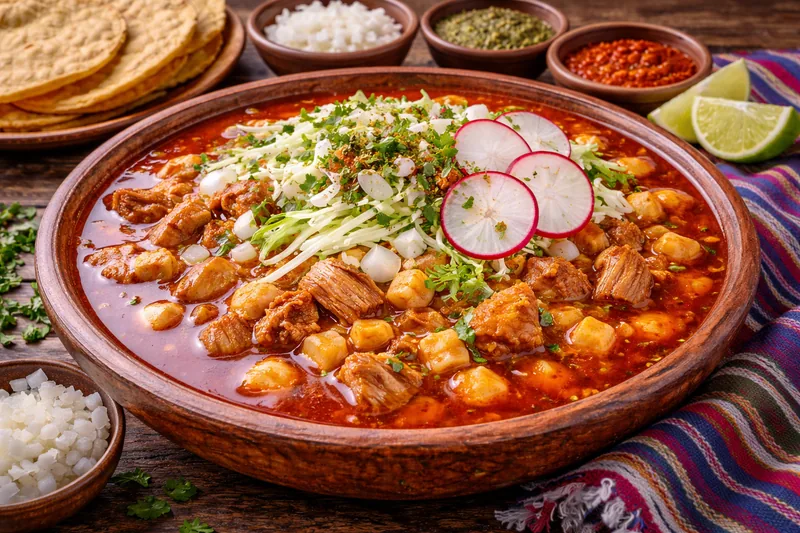
The most used chillies in Jalisco are the guajillo (the base of birria and red pozole), the dried chile de árbol (the soul of the salsa that 'drowns' the tortas), the chipotle and the ancho chilli. Goat and lamb are emblematic meats of traditional birria, although today the beef version that became popular in Tijuana and conquered the world predominates. The torta ahogada is made with salty birote, a unique crisp bread of Guadalajara, filled with carnitas and 'drowned' in tomato and chile de árbol salsa. Jalisco red pozole carries peeled cacahuazintle maize, pork head and lean meat, and is accompanied by radish, lettuce, onion, oregano and lime. The carnes en su jugo combine minced beef, bacon, pot beans and beef broth. Jericalla, a Guadalajaran dessert that mixes flan and crème brûlée, is served with a burnt surface. Tequila accompanies as an aperitif or digestif, and tejuino (a fermented maize drink) refreshes during summer.
Cultural significance
Jalisco cuisine is probably the most iconic of Mexico internationally, alongside the Pueblan. It forms part of traditional Mexican cuisine inscribed by UNESCO in 2010 as Intangible Cultural Heritage. Tequila, with a designation of origin since 1974, is the main Mexican spirit export and an economic driver of the Valles region. Beef birria has had a global boom since the 2010s, with quesabirrias and consommé for golden tacos turned into a viral phenomenon. The October fairs in Guadalajara, the international mariachi gatherings (another UNESCO World Heritage since 2011) and the pilgrimages to the Basilica of Zapopan are always accompanied by Guadalajaran food. Historic restaurants such as La Chata, founded in 1942, and markets such as San Juan de Dios sustain the tradition. Tlaquepaque and Tonalá, today part of the metropolitan area, preserve centuries-old fondas and the production of glazed clay pots in which birria is cooked.
Related recipes
Now that you know what it is, try cooking it at home with our step-by-step recipes:



Ingredients to cook it
Find where to buy authentic ingredients in Mexican shops in the US:
Frequently asked questions
- What is the difference between Jalisco birria and Tijuana birria?
- Traditional Jalisco birria is made with goat or lamb, steam-cooked wrapped in maguey leaves and served on a plate with its consommé and tortillas on the side. Tijuana-style birria uses beef and is served in golden tacos (quesabirria) dipped in the consommé. Both share the marinade of guajillo and ancho chillies.
- What is a torta ahogada?
- It is the emblematic torta of Guadalajara: a salty birote filled with pork carnitas, submerged wholly or partly in tomato and onion salsa with plenty of chile de árbol. It is served with pickled red onion on top. The 'mediohogada' version has only half bathed for those who tolerate less heat.
- What does Jalisco cuisine taste like?
- It has intense, spicy and deep flavours, dominated by dried chillies such as the guajillo and the chile de árbol. Birria is spiced and aromatic from the cumin, clove and bay leaf; the carnes en su jugo are herbal from the coriander and the beans; red pozole combines mild cacahuazintle maize with a deep broth. Tequila accompanies with herbal notes of agave.
- Where does Jalisco cuisine come from?
- It is native to the state of Jalisco, in western Mexico, with roots in the Coca, Tecuexe and Huichol peoples. Its main development occurred during the colonial period in Nueva Galicia, with its epicentre in Guadalajara, founded in 1542. Birria was born in the Cocula region and tequila in the blue agave valleys, both with a clear regional identity.
Sources
- Gastronomía de Jalisco - México Desconocido
- Cocina jalisciense - Larousse Cocina
- Paisaje agavero - UNESCO
- Gastronomía de Jalisco - Wikipedia ES
Founder, Recetas Mexas
Mexican from Puebla, IT professional and foodie. Author of 1000+ authentic Mexican recipes adapted for home kitchens worldwide. Based in Madrid since 2018.
Read moreEnjoyed this?
Follow on TikTok for Mexican recipe & restaurant videos, and get updates by email.