Pozole: what it is, history and traditional Mexican recipe

Edmond Bojalil · Founder, Recetas Mexas
Updated: 2 Sept 2026
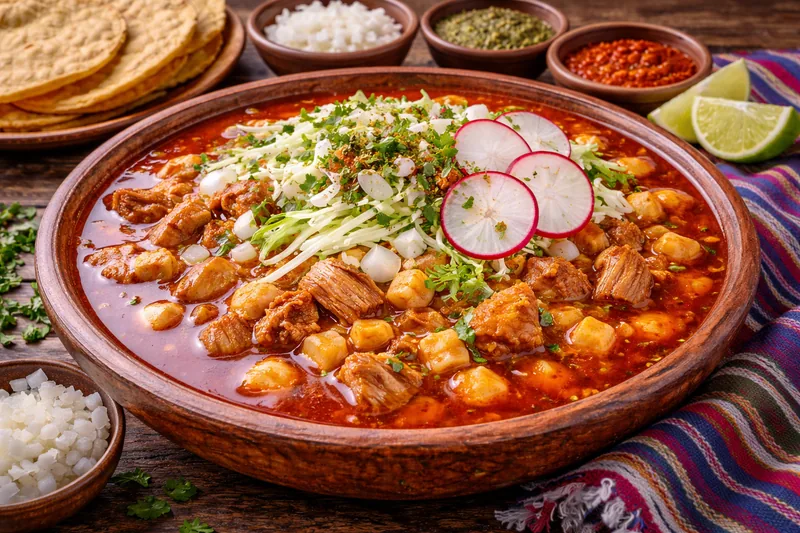
What is it?
Pozole is a thick broth made with nixtamalised cacahuazintle maize that bursts open into a flower shape, simmered for hours with meat (traditionally pork, but also chicken, seafood or mushrooms) and served with garnishes of lettuce, radish, onion, oregano, lime and chilli powder. It is one of the oldest and most emblematic dishes in Mexico: there are three great regional families, red pozole from Jalisco, white from Guerrero and the green Guerrero version made with pumpkin seed. It is served mainly on Thursdays and Saturdays in fondas, and is the obligatory dish at the patriotic dinners of 15 and 16 September throughout the country.
Origin and history
Pozole has a pre-Hispanic origin documented in the Florentine Codex of Friar Bernardino de Sahagun (16th century). In the original Aztec version it was a ritual dish of the god Xipe Totec prepared with the human flesh of sacrificed captives, reserved for the tlatoani and the priests. After the Franciscans banned ritual cannibalism in 1521, the human flesh was replaced with pork, an animal recently introduced by the Spanish whose flavour was, according to the chronicles, very similar. The word pozole comes from the Nahuatl pozolli, meaning "foamy" or "boiled", referring to the flower that the cacahuazintle maize kernel opens into when cooked with lime. During the viceroyalty the regional variants became established, and by the 19th century pozole was already a central dish of the patriotic festivities, a role it retains to this day.
Characteristic ingredients
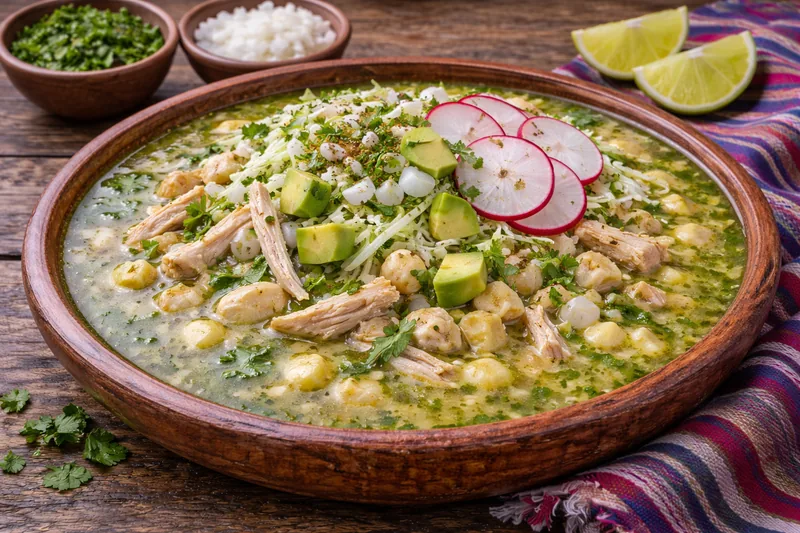
The ingredient that defines pozole is cacahuazintle maize, a heirloom variety with a large white kernel that is nixtamalised with quicklime, decapped (the pedicel is removed) and boiled until it bursts into a flower shape. The traditional meats are pork head, backbone and lean cuts, although chicken, prawn (Guerrero and Sinaloa), mushroom and jackfruit versions are made today. The difference between the three pozoles lies in the broth: the white one has no chilli, the red one is coloured with guajillo and ancho, and the green Guerrero version incorporates ground pumpkin seed, tomatillo, serrano chilli and epazote. The garnishes are sacred: finely chopped cos lettuce or cabbage, sliced radish, white onion, dried oregano, piquin chilli and lime halves. In Jalisco it is served with tostadas and cream; in Guerrero with mezcal and pork crackling.
Cultural significance
Pozole is the emblematic dish of the Mexican Patriotic Festivities: practically every family in the country cooks or eats it on the nights of 15 and 16 September, as well as at Christmas, New Year and birthday gatherings. It is part of traditional Mexican cuisine, inscribed by UNESCO in 2010 as Intangible Cultural Heritage of Humanity. In Guerrero there is the ritual of "pozole Thursday", the day on which every fonda and restaurant in the state prepares green pozole as the dish of the day. The economy of pozole is significant: cacahuazintle maize is grown mainly in the High Valleys of the State of Mexico, Tlaxcala and Puebla, and there are pre-cooked commercial varieties ("pozole maize") that have democratised its home preparation outside the producing areas.
Related recipes
Now that you know what it is, try cooking it at home with our step-by-step recipes:



Ingredients to cook it
Find where to buy authentic ingredients in Mexican shops in the US:
Frequently asked questions
- What is the difference between red, white and green pozole?
- White pozole (Guerrero) is the base broth without chilli, to which each diner adds salsa to taste. The red one (Jalisco) has ground guajillo and ancho chilli in the broth. The green Guerrero version incorporates toasted pumpkin seed, tomatillo, serrano chilli and epazote, which gives it a thicker, more herbal flavour.
- What kind of maize is used for pozole?
- Cacahuazintle maize is used, a heirloom variety with a large white kernel that is nixtamalised with quicklime. When cooked it opens into a flower shape, an essential characteristic of the dish. There are also pre-cooked commercial presentations in tin or bag, known as pozole maize.
- Is pozole spicy?
- The base broth is not necessarily spicy: the white one has no chilli and the red and green ones have moderate levels. The heat is adjusted at the table with piquin chilli, chile de arbol salsa or regional salsas. It is the diner who decides the final intensity.
- Why is pozole eaten on 15 September?
- Because of its pre-Hispanic origin, pozole is associated with Mexica identity and is considered a patriotic table dish. During the 19th century it became established as the ritual food of the night of the Grito de Independencia, a custom that spread across the whole country and survives as a family tradition.
Sources
- México Desconocido — Pozole: historia y tradición
- Larousse Cocina — Pozole
- Gobierno de México — Pozole, platillo tradicional
Founder, Recetas Mexas
Mexican from Puebla, IT professional and foodie. Author of 1000+ authentic Mexican recipes adapted for home kitchens worldwide. Based in Madrid since 2018.
Read moreEnjoyed this?
Follow on TikTok for Mexican recipe & restaurant videos, and get updates by email.