Independence Day pozole: what it is and why it's eaten

Edmond Bojalil · Founder, Recetas Mexas
Updated: 12 Aug 2026
What is it?
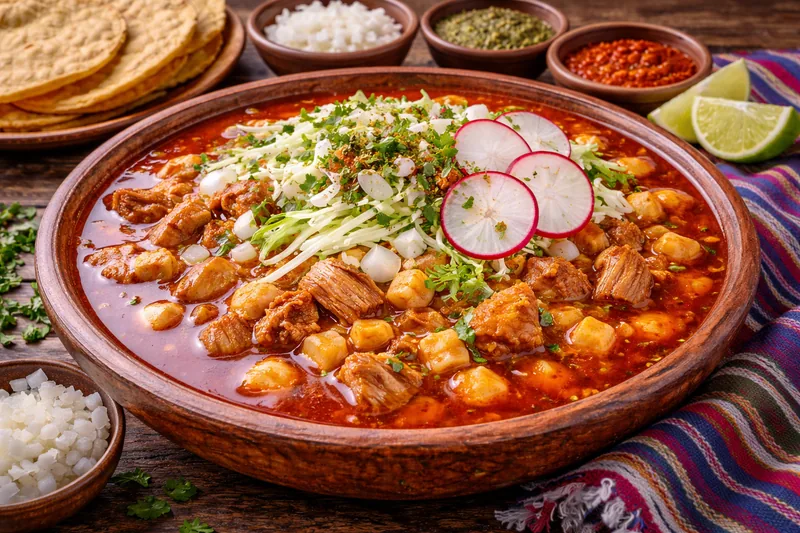
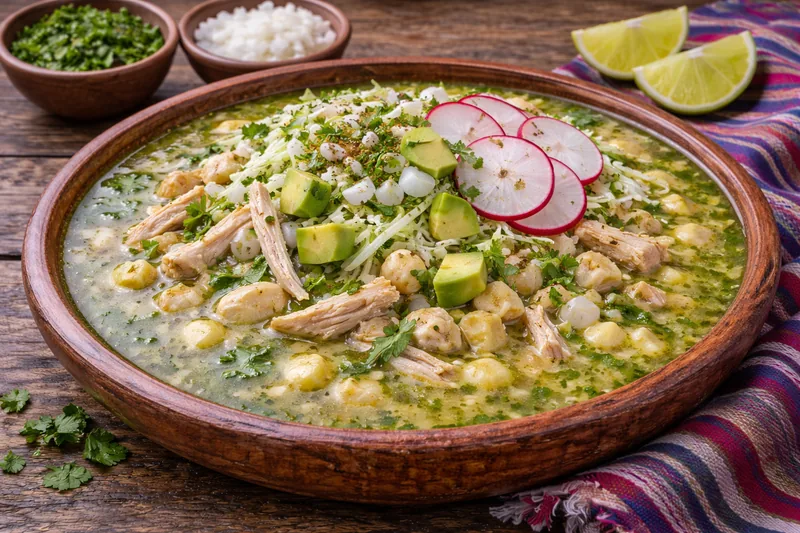
Pozole is the centrepiece of the celebration of the Independence Cry on 15 September and the anniversary of Independence Day on 16 September in Mexico. A thick, deep broth of cacahuazintle maize cooked for hours until the kernels burst open ('florear') into soft white grains, mixed with pork (head, backbone, leg, loin) or chicken, in three colour versions evoking the flag: green pozole (with tomatillo, herbs and pumpkin seed), red pozole (with ancho and guajillo chillies), and white pozole (no chilli in the broth, decorated with three colours at the table). It is served in a deep plate or bowl with garnishes laid out to add at will: sliced lettuce, radishes, chopped onion, oregano, piquín chilli, lime and tostadas with cream. It is communal food that brings together families and friends around the table on the night of the 15th with the Cry ringing out from the television.
Origin and history
Pozole has deeply pre-Hispanic origins, documented by Bernardino de Sahagún in the Florentine Codex as a Mexica ritual dish made with cacahuazintle maize (Zea mays var. cacahuazintle), a variety with large, hard kernels that requires extended nixtamalisation with lime to burst open. In the pre-Hispanic period pozole was made with the human flesh of ritual sacrifices and eaten during religious festivities; after the conquest, the friars banned human flesh and replaced it with pork, an animal newly introduced by the Spanish. Larousse Cocina records that pozole thus became a mestizo dish of which there are three great regional families: the red of the Pacific-North (Sinaloa, Sonora, Nayarit, Jalisco), the green of Guerrero (with pumpkin seed), and the white of the centre and the State of Mexico. The association with the Independence festivities of 15-16 September became established in the 20th century as an urban tradition. México Desconocido documents that pozole is a national dish of identity, present in every region and consumed en masse in September.
Characteristic ingredients
Cacahuazintle maize is the fundamental ingredient, an endemic Mexican variety with large, mealy kernels grown mainly in Tlaxcala, the State of Mexico, Puebla and Morelos. To make pozole, the kernels are nixtamalised with lime (the process of boiling the maize with lime water to remove the husk and increase its nutritional value, a pre-Hispanic technique) and cooked for 2-4 hours until they 'florear' (burst open like white flowers). The traditional meats are pork head, backbone, rib, leg or loin; in Guerrero chicken is also used. The pork is cooked in the same broth for 2-3 hours. The seasonings vary: red pozole has ancho, guajillo and mulato chillies, rehydrated and blended; green Guerrero pozole has tomatillo, poblano or serrano chilli, toasted pumpkin seed, epazote leaves, coriander and lettuce; white pozole has no chilli in the broth. The garnishes served at the table: lettuce, sliced radishes, chopped white onion, dried oregano, piquín chilli powder, lime juice, tostadas with cream, avocado.
Cultural significance
Pozole is one of the strongest and liveliest symbols of Mexican national culinary identity, an emblematic dish of the Independence festivities of 15 and 16 September when it is made in huge quantities for family gatherings, offices, schools, restaurants and public celebrations. The commemoration of the Cry of Dolores (Miguel Hidalgo, 15 September 1810) and Independence Day (16 September) brings the nation together each year, and pozole is the ritual food of the date. The pozole economy has spectacular peaks in September: cacahuazintle maize growers, pig farmers, traditional cooks and specialised restaurants (pozolerías such as El Cardenal, La Casa de Toño, Potzollcalli) experience extraordinary sales. Traditional Mexican cuisine was recognised by UNESCO as Intangible Cultural Heritage of Humanity in 2010, and pozole is among the central dishes of that heritage. Its character as a pre-Hispanic-mestizo, ritual and communal dish makes it one of the most complete expressions of gastronomic Mexican-ness.
Related recipes
Now that you know what it is, try cooking it at home with our step-by-step recipes:



Ingredients to cook it
Find where to buy authentic ingredients in Mexican shops in Canada:
Frequently asked questions
- What is the difference between red, green and white pozole?
- Red pozole has dried chillies (ancho, guajillo, mulato), rehydrated and blended into the broth, giving it an intense red colour and moderate heat; typical of the Pacific-North. Green Guerrero pozole has tomatillo, poblano chilli, toasted pumpkin seed and herbs, an olive-green colour and a herbal flavour. White pozole is the maize-and-pork broth without chilli, decorated with green, red and white at the table. All three can be served at the Independence festivities.
- What does pozole taste like?
- It tastes of a deep broth of nixtamalised cacahuazintle maize with earthy and sweet notes, enriched with the unctuousness of long-cooked pork. The red version provides moderate heat and toasted chilli notes; the green adds herbal freshness and the umami of pumpkin seed; the white is cleaner. The garnishes add crunch, acidity (lime), aromatics (oregano), freshness (lettuce, radish) and heat (piquín).
- How is pozole served?
- It is served in a deep plate or bowl, with a generous portion of broth, burst-open maize and shredded meat. Each guest seasons their pozole with whichever garnishes they prefer: sliced lettuce, radishes, onion, oregano, piquín chilli, lime and sometimes avocado. It is accompanied by warm tostadas with cream, cheese or beans. It is a communal dish, ideal for large gatherings at celebrations.
- Where does pozole come from?
- It is native to Mesoamerica, documented by Sahagún in the Florentine Codex as a pre-Hispanic Mexica ritual dish made with endemic cacahuazintle maize. After the conquest, the ritual human flesh was replaced by pork. Today's mestizo pozole has three great regional families: red of the Pacific-North, green of Guerrero, white of the centre. Traditional Mexican cuisine was recognised by UNESCO in 2010.
Sources
Founder, Recetas Mexas
Mexican from Puebla, IT professional and foodie. Author of 1000+ authentic Mexican recipes adapted for home kitchens worldwide. Based in Madrid since 2018.
Read moreEnjoyed this?
Follow on TikTok for Mexican recipe & restaurant videos, and get updates by email.