Virgin of Guadalupe food: what is eaten on 12 December

Edmond Bojalil · Founder, Recetas Mexas
Updated: 2 Sept 2026

What is it?
The food of the Day of the Virgin of Guadalupe (12 December) is one of the most participatory gastronomic expressions of the Mexican religious calendar, linked to the feast of the Virgin of Guadalupe (Patroness of Mexico), which commemorates her apparitions to Juan Diego on the hill of Tepeyac in 1531. Throughout the country, especially in Mexico City (Basilica of Guadalupe), Puebla, Jalisco, Michoacán and Veracruz, the parishes organise masses, mañanitas, pilgrimages and fairs where red and green tamales, chocolate atole, pozole, mole, Guadalupe enchiladas, tacos de canasta, gorditas, tlacoyos, tostadas, café de olla, ponche, buñuelos and aguas frescas are served. The pilgrims who travel to the Basilica receive free tamales and atole at the Guadalupe stalls. It is ritual food of faith and community.
Origin and history
Devotion to the Virgin of Guadalupe originates in the apparitions of the Virgin to Juan Diego Cuauhtlatoatzin on the hill of Tepeyac in December 1531, a sacred Mexica site where Tonantzin, the mother goddess of fertility, was venerated. The cultural syncretism was profound: the Dark Virgin adopted mestizo iconography and became a symbol of national identity. Larousse Cocina and México Desconocido document that the Guadalupe festivities of 12 December included, from the 16th century, offerings of food and drink, merging pre-Hispanic rituals of Tonantzin with the Catholic celebration. The mass preparation of tamales, atoles and mole for the pilgrims became established in the 19th century when the Basilica of Tepeyac became one of the most visited sanctuaries of world Catholicism. The Government of Mexico recognises the Guadalupe celebration as a central part of the intangible cultural heritage. Traditional Mexican cuisine was inscribed by UNESCO in 2010.
Characteristic ingredients
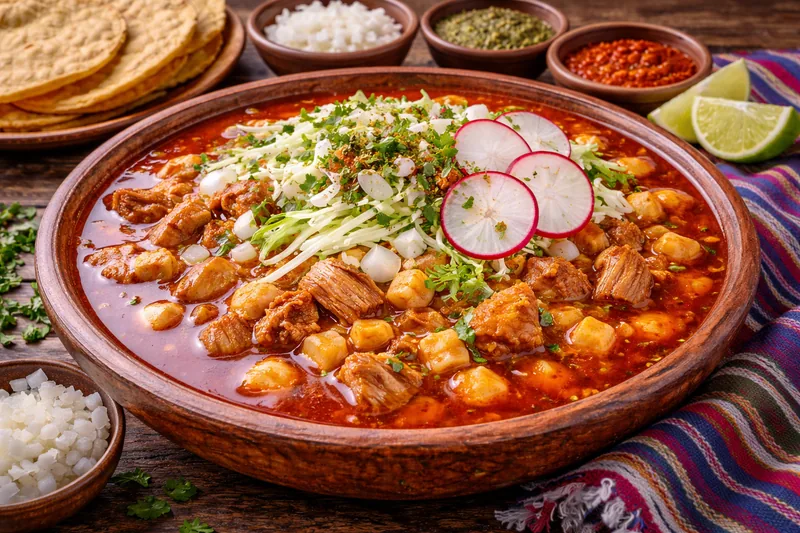
The Guadalupe dishes vary by region but have common ingredients linked to the Mexican ritual tradition. Tamales are the most universal food: red with pork in guajillo and ancho chilli sauce, green with chicken and tomatillo salsa, mole poblano or Oaxacan, rajas with cheese, sweet strawberry or pineapple. They are made in huge quantities (dozens or hundreds of dozens) in communal parish kitchens. Chocolate atole (champurrado) is the ritual drink par excellence: maize dough with table chocolate, cinnamon and piloncillo. Red or green pozole, Guadalupe enchiladas (filled with chicken in guajillo chilli sauce), mole with turkey, tacos de canasta, gorditas and tlacoyos form part of the menu. Buñuelos with syrup, palanquetas, borrachitos, candied peanuts and colaciones close the sweet menu. In Puebla, Guadalupe cemitas are served; in Jalisco, birria and pozole.
Cultural significance
The Guadalupe feast of 12 December is the most crowded religious celebration of the year in Mexico, with pilgrimages of millions of people to the Basilica of Guadalupe in Mexico City (the second most visited Catholic church in the world after the Vatican) and to other Guadalupe basilicas throughout the country. The parish fairs bring whole communities together for a week, generating fellowship, devotion and local economy. The preparation of tamales and atole for poor pilgrims is an act of ritual charity: many parishes and civil organisations give away thousands of rations daily. Traditional Mexican cuisine was recognised by UNESCO as Intangible Cultural Heritage of Humanity in 2010. The Virgin of Guadalupe was declared Patroness of Mexico by Leo XIII in 1895 and Patroness of America by Pius XII in 1945. The Guadalupe gastronomy is an expression of Mexican religious-cultural syncretism and of popular solidarity.
Related recipes
Now that you know what it is, try cooking it at home with our step-by-step recipes:


Ingredients to cook it
Find where to buy authentic ingredients in Mexican shops in the US:
Frequently asked questions
- What is traditionally eaten on 12 December in Mexico?
- Tamales (red, green, mole, rajas, sweet), chocolate atole (champurrado), red or green pozole, mole with turkey or chicken, Guadalupe enchiladas, tacos de canasta, gorditas, tlacoyos, buñuelos with piloncillo syrup and café de olla. At parish fairs and pilgrimages, free or low-cost rations are served to the pilgrims.
- What do the tamales of the Guadalupe fairs taste like?
- They taste of traditional Mexican tamales: nixtamalised maize dough with lard, fluffy, wrapped in dried corn husk. The red ones have pork in a moderately spicy salsa; the green ones, chicken with herbal freshness; the mole ones, a complex flavour of chillies and sweet spices. Chocolate atole accompanies them with its deep sweetness and spiced cinnamon notes.
- How are the Guadalupe dishes served?
- They are served at parish fairs with large tables, on disposable plates or communal crockery, throughout the week of 12 December. The pilgrims receive them at the Basilica and at stalls along the pilgrimage routes. Families also make tamales and atole at home to celebrate with neighbours and share with those attending the mass.
- Where does the tradition of eating tamales on 12 December come from?
- The tradition merges pre-Hispanic rituals of offering tamales to the goddess Tonantzin (whose sanctuary was on Tepeyac before the Guadalupe apparition) with the Catholic feast of the Virgin of Guadalupe established after 1531. Mexican cultural syncretism transformed the Mesoamerican maize rituals into a Guadalupe celebration of great breadth, current from the 16th century to today.
Sources
- Día de la Virgen de Guadalupe — México Desconocido
- Día de la Virgen de Guadalupe — Gobierno de México
- Cocina tradicional mexicana — UNESCO
Founder, Recetas Mexas
Mexican from Puebla, IT professional and foodie. Author of 1000+ authentic Mexican recipes adapted for home kitchens worldwide. Based in Madrid since 2018.
Read moreEnjoyed this?
Follow on TikTok for Mexican recipe & restaurant videos, and get updates by email.