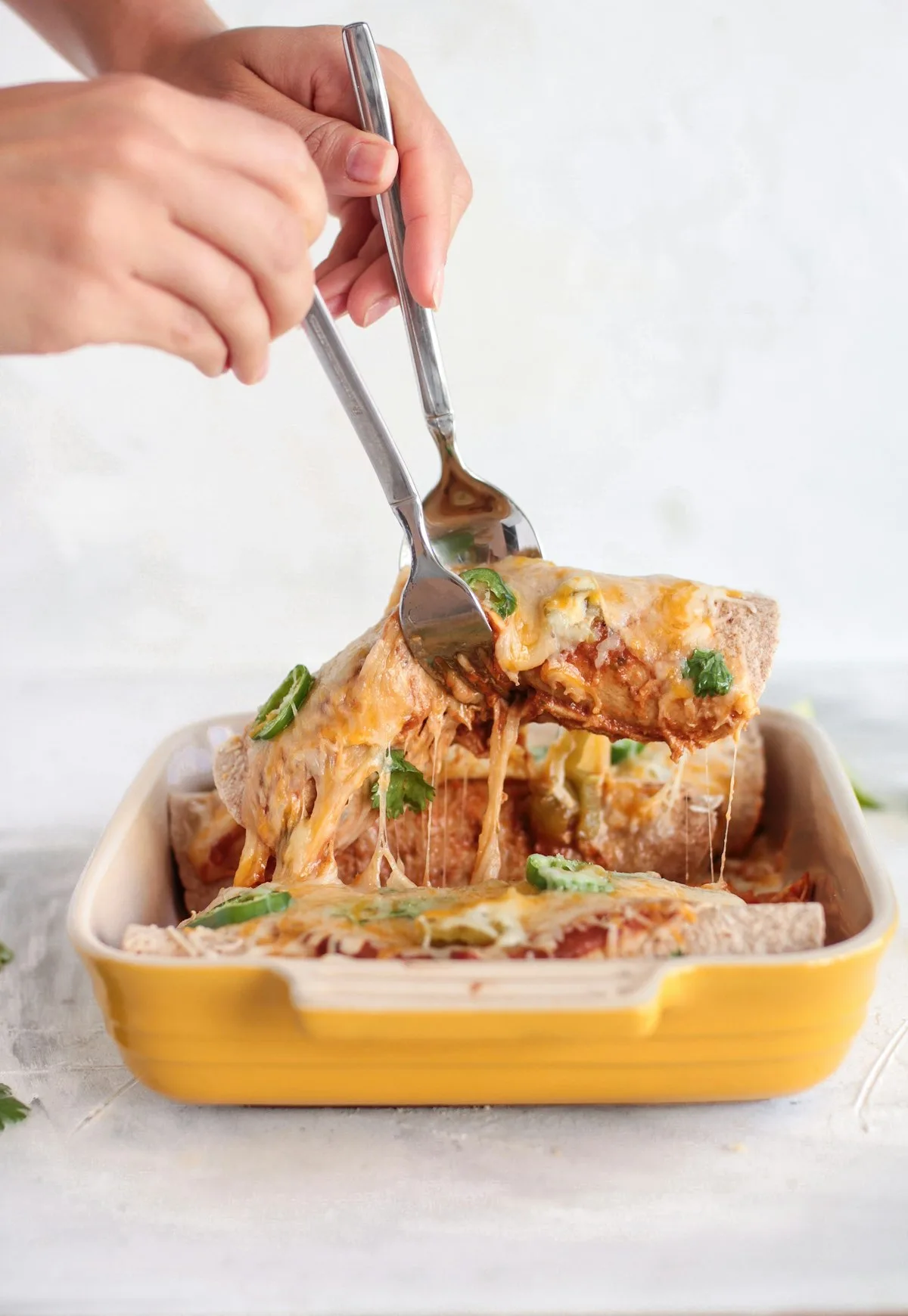
Enchiladas: Every Type and Recipe
A complete guide to every type of Mexican enchilada: green, red, suizas, mole, potosinas and more. History, recipes, regional differences and how to make them perfect at home.
The shops and prices in this guide are from Spain.
Enchiladas are one of the oldest and most beloved dishes in Mexico. Their concept is simple: filled tortillas bathed in salsa. But from that base, each region has created its own version, resulting in an astonishing variety that deserves to be explored in depth.
A Brief History
Enchiladas have existed since before the Spanish conquest. The Aztecs already ate rolled tortillas with chile salsa. The name comes from the Nahuatl "chile" (chile) + the Spanish suffix "-ada" (full of). Literally: "enchilada" = "full of chile". With the arrival of the Spaniards and their cheeses, creams and meats, enchiladas evolved into the versions we know today.
1. Green Enchiladas
Green enchiladas are perhaps the most popular throughout Mexico. Tortillas filled with chicken bathed in green tomatillo salsa, crowned with crema and queso fresco.
Origin: National. Difficulty: Easy. Heat: Low-medium.
Salsa: Boiled tomatillos + serrano chile + cilantro + onion + garlic, blended. If you cannot find tomatillo, use green tomato + lime.
Trick: Pass the tortillas through hot oil for 5 seconds before filling. This seals them and prevents them from breaking or falling apart with the salsa. It is the step that separates mediocre enchiladas from perfect ones.
2. Red Enchiladas
Red enchiladas use guajillo (or ancho) chile salsa, earthier and deeper than the green one.
Origin: Central Mexico. Difficulty: Easy. Heat: Low.
Salsa: Toasted and soaked guajillo chiles + charred tomato + garlic, blended, strained and fried in oil.
Classic filling: Shredded chicken, but also cheese (vegetarian version), potato (economical version) or shredded meat.
3. Enchiladas Suizas
The "gourmet" version of enchiladas: bathed in creamy green salsa and grilled with cheese until golden and bubbling.
Origin: Mexico City, Sanborns Restaurant (1950s). They are called "suizas" (Swiss) for the cream and cheese, associated with Swiss baking.
Key difference: The green salsa is mixed with cream before bathing the enchiladas, and then they are grilled in the oven with grated cheese. The result is indulgent, creamy and absolutely addictive.
In the US: Use cooking cream mixed with the green salsa. Grill with emmental or gouda cheese (they melt well and brown nicely).
4. Mole Enchiladas
Tortillas bathed in mole, generally filled with chicken and decorated with sesame and onion. They are the quintessential celebration dish.
Origin: Puebla and Oaxaca. Difficulty: Medium (if you use commercial mole paste, easy).
Trick: The mole should be hot and of a good consistency (neither too thick nor too liquid) when you bathe the tortillas. If it is too thick, add chicken broth.
5. Enchiladas Potosinas
Tortillas dyed red with ancho chile FROM THE MASA, filled with cheese and salsa, and cooked on a comal or pan. They are completely different from the other enchiladas.
Origin: San Luis Potosí. Difficulty: Medium-high (requires making a special masa).
What is special: The chile goes INSIDE the masa, it is not a salsa that is put on top. The tortilla itself is red, spicy and with an incredible flavor. They are made empanada-style: the tortilla is filled with cheese, folded and cooked on a comal with a little oil.
6. Enfrijoladas
Technically they are "bean enchiladas" - tortillas bathed in black bean salsa instead of chile salsa. Smooth, creamy and very satisfying.
Origin: Oaxaca. Difficulty: Very easy. Heat: None (unless you add chile).
Express recipe: Blend canned black beans with their liquid, onion and garlic. Heat, pass the tortillas through, fold, bathe with more salsa, crema and cheese. 15 minutes and you have dinner.
7. Entomatadas
The tomato-salsa version: tortillas bathed in charred tomato salsa with onion and garlic. Smooth, slightly sweet and without heat.
Origin: National. Difficulty: Easy. Heat: None.
Perfect for: Children and people who cannot tolerate heat. All the flavor without any chile.
Universal Technique for Perfect Enchiladas
- The salsa: It must be ready and hot before you start assembling.
- The tortillas: Pass them through hot oil for 5 seconds per side (a pan with 1cm of oil). Drain on absorbent paper. This step is CRUCIAL.
- Fill and roll: Put a generous spoonful of filling in the center, roll up and place in a baking dish with the opening facing down.
- Bathe: Pour the hot salsa over the top, covering all the enchiladas. Add crema and cheese.
- Bake (optional): 10-15 min at 180°C to broil the cheese. It is not obligatory but it looks spectacular.
Common Mistakes
- Tortillas that break: You did not pass them through oil, or the salsa was too hot when you bathed them.
- Dry enchiladas: Too little salsa. The key is to be GENEROUS with the salsa. Always make more than you think you need.
- Soggy enchiladas: The salsa was too liquid. Reduce the salsa by boiling it for 5-10 min before using.
- Cheese that does not melt: You used queso fresco for grilling. Queso fresco crumbles, it does not melt. Use mozzarella, gouda or manchego for the gratin.
Pairing
Enchiladas go very well with wine: the green ones with Godello or Verdejo, the red ones with young Garnacha, the suizas with Chardonnay, the mole ones with Monastrell. Or simply with agua de horchata and a very cold beer.
Enchiladas are one of the most rewarding dishes in Mexican cooking: easy to make, impossible to get wrong (if you follow the basic technique), and universally loved. Explore our catalogue to find your favorite variety.
Enchiladas Region by Region: The Map of Mexico in Salsa
Mexico has at least 30 documented regional variants of enchiladas. Beyond the seven main varieties we have already described, each state has developed its own interpretation. In our experience exploring Mexican gastronomy, these are the most fascinating regional variants worth knowing:
- Enchiladas mineras (Guanajuato): Bathed in guajillo chile, they are served with cooked carrots and potatoes on top, along with a piece of fried chicken. The name comes from the miners who bought them as a hearty lunch. It is a complete dish in itself.
- Enchiladas de Durango: With pasilla chile salsa, filled with cheese and bathed with crema. The pasilla chile gives them a smoky, deep flavor that sets them apart.
- Enchiladas placeras (Michoacán): Served with a red enchilada, a piece of chicken, pickled carrots, fried potatoes and queso fresco. It is more of a combined dish than simple enchiladas.
- Papadzules (Yucatán): Tortillas bathed in pumpkin-seed salsa, filled with chopped hard-boiled egg and with tomato salsa on top. It is the Maya version of enchiladas and has an absolutely unique, earthy and elegant flavor.
How to Prepare Enchiladas for a Large Group in the US
Enchiladas are the perfect dish for parties and gatherings because they can be assembled in advance. We have tried this technique for groups of 10-15 people and it works wonderfully:
A day before: Make the salsa (or salsas if you want to offer variety), cook and shred the chicken, and have the grated cheese ready. Store everything in the fridge.
2-3 hours before serving: Pass the tortillas through oil, fill, roll and place on the baking trays. Do not add the salsa yet - assembled enchiladas without salsa keep well for a couple of hours.
30 minutes before: Bathe with the hot salsa, add the cheese and put in the oven at 180°C for 15-20 minutes until they bubble. Take out, add the crema and fresh cilantro and serve immediately.
Quantities for 10 people: 30 corn tortillas (3 per person), 1kg of chicken breast, 1.5L of salsa, 300g of cheese for grilling, 250ml of crema. Approximate budget: $20-25 in Walmart, which works out at $5.70-2.10 per person - a bargain for such a great dish.
Enchiladas and Health: Lighter Versions
If you are worried about the calories in traditional enchiladas (the step of frying the tortillas in oil adds quite a lot), there are alternatives we have tried with excellent results:
Oven-warmed tortillas: Instead of frying the tortillas, wrap them in a damp cloth and heat them in the microwave for 30 seconds. They come out flexible without the need for oil. Fill, roll and bake with salsa. You lose a little texture but save about 200 kcal per portion.
Zucchini enchiladas: Replace the tortillas with wide strips of zucchini cut lengthways with a mandolin. Fill with chicken and cheese, roll, bathe with salsa and bake. It is the low-carb version that has become very popular and surprises with how well it turns out.
Salsa without frying: Instead of frying the salsa in oil (the classic step that gives it depth), simply blend the ingredients and boil directly. The flavor is slightly different but just as good, and you eliminate the fat from the sofrito.
Where to Buy Everything for Your Enchiladas in the US
Getting the ingredients for authentic enchiladas in the US is easier than ever. Dried chiles - guajillo, ancho, chipotle - are the key piece and are found in any Latin shop for $5.70-3.40 a bag, which is enough for 4-5 batches of enchiladas. In Madrid, the shops in Lavapiés and Usera have the best selection; in Barcelona, the Raval; in Valencia, Ruzafa.
Corn tortillas are the other critical ingredient. The Mission ones from Kroger work, but the fresh ones from a Latin shop are far superior - more flexible, with a better corn flavor and they do not break when rolling. Buy the kilo packet ($5.60-3.40) and freeze the ones you do not use; they thaw perfectly in the microwave.
For the crema, the sour cream from Walmart (dairy section, $5) is a perfect substitute for Mexican crema. And the cheese: mozzarella for melting, grated mature manchego for an intense flavor, or crumbled Burgos-style fresh cheese for the classic green enchiladas. Find more ingredients and where to buy them in our recommended Mexican shops, and visit a Mexican restaurant if you want to try enchiladas made by experts before you launch into cooking.

Founder, Recetas Mexas
Mexican from Puebla, IT professional and foodie. Author of 1000+ authentic Mexican recipes adapted for home kitchens worldwide. Based in Madrid since 2018.
Read more